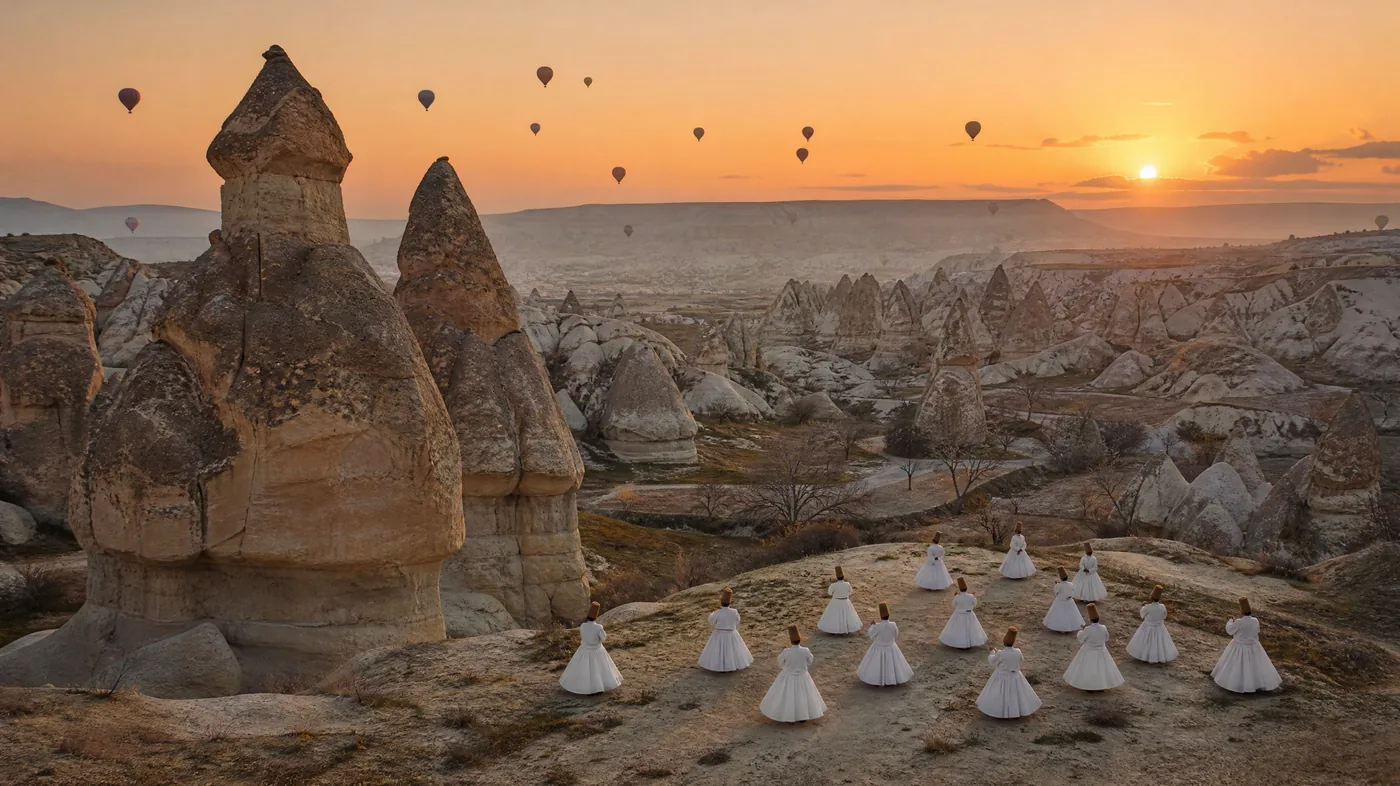
Booking choice: The ceremony in a real Mevlevi lodge, from $26 per person. Check dates Tour details
The words get used loosely in English. "Whirling dervish" turns up as a figure of speech for anyone who moves fast, and "Sufi" gets attached to anything mystical. Inside a Sema hall they have precise meanings, and knowing them makes the hour far richer.
This guide sticks to named sources: UNESCO, GoTürkiye, HodjaPasha's own pages, Merriam-Webster and Wikipedia. It explains, it does not rule on matters of faith. Where practice differs between groups, it says so.
The quick answer
"Dervish" comes from the Persian darvish, through the Turkish derviş, and means a member of a Sufi order. Every whirling dervish is a Sufi; not every Sufi whirls. The whirling dervishes belong to the Mevlevi order, which UNESCO says was founded in Konya in 1273, and they are Muslims. The ceremony in a real Mevlevi lodge starts with the resident sheikh explaining all of this before the ritual, from $26.
What does the word "dervish" mean?
A member of a Sufi order. Merriam-Webster traces the English word to the Turkish derviş, literally "beggar", from the Persian darvīsh.
Merriam-Webster's definition: "a member of a Muslim religious order noted for devotional exercises (such as bodily movements leading to a trance)". Wikipedia adds that the real origin of the Persian word is unknown; one theory links it to the Middle Persian drayōš, "poor, needy". The poverty meant here is chosen, a turning away from the ego and from possessions.
- In Turkish: derviş. The plural you hear in Türkiye is dervişler.
- In the Sema hall: a whirling dervish is properly a semazen, from the Persian for "one who does the sema" (Wikipedia).
- How to pronounce it: Merriam-Webster gives ˈdər-vish, said like "DUR-vish", with the stress on the first syllable.
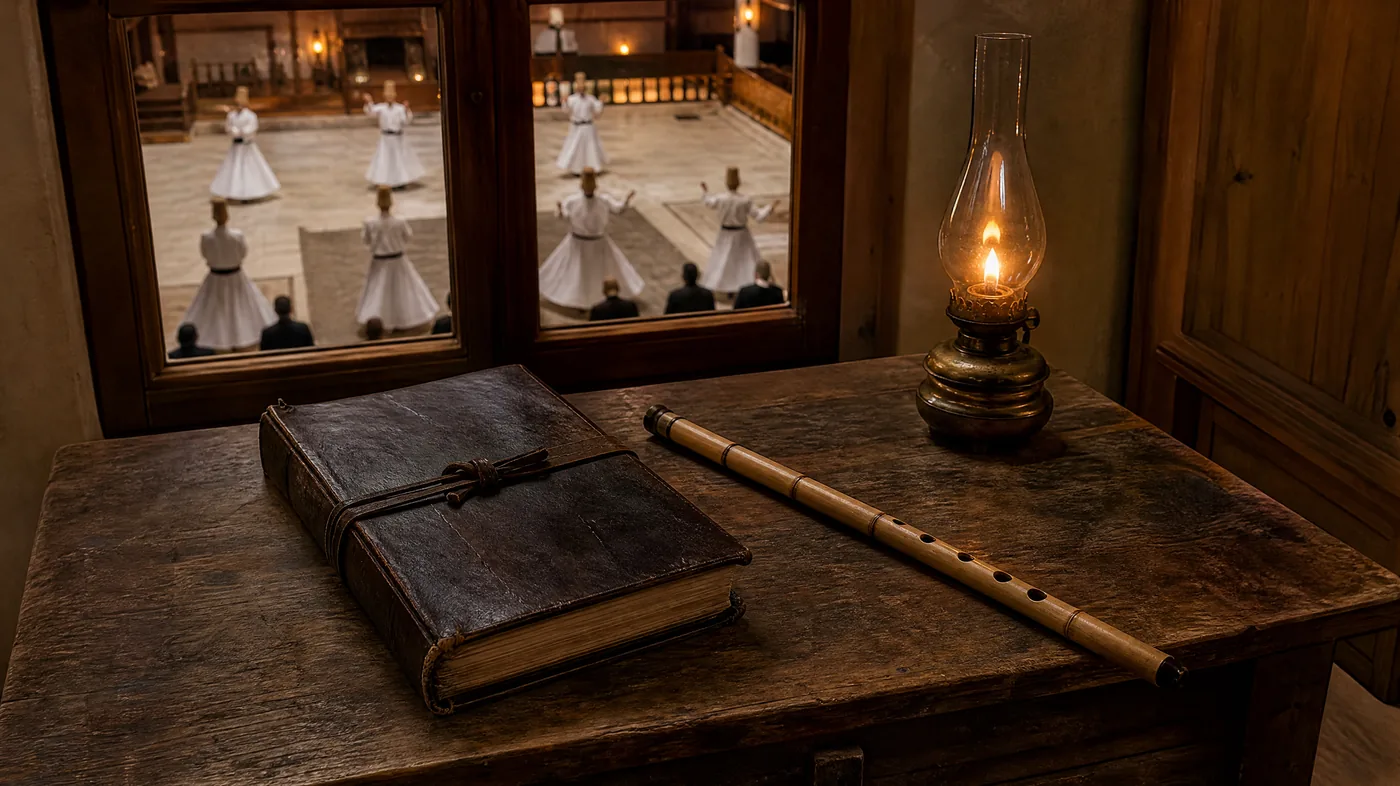
What is the difference between a Sufi and a dervish?
Sufism is the mystical path within Islam and a Sufi is anyone who follows it. A dervish is an initiate of that path, usually a member of a Sufi order. The whirling dervishes are one such order, the Mevlevi.
Think of it as three circles, each inside the last. Wikipedia's article on the Mevlevi order puts it this way: "Dervish is a common term for an initiate of the Sufi path", and the Mevlevis are known as whirling dervishes because of their practice of whirling while performing dhikr, the remembrance of God.
Not all Sufis whirl. Each order has its own practices and dress, and Wikipedia names several others, such as the Qadiriyya and the Bektashis. Whirling is also practiced by a few other orders, but the Mevlevi Sema is the form UNESCO lists. The terms you will meet at a ceremony:
| Term | What it means |
|---|---|
| Sufism | The mystical tradition within Islam |
| Dervish (derviş) | An initiate of the Sufi path, a member of a Sufi order |
| Mevlevi | The order founded by Rumi's followers in Konya in 1273 |
| Mevlana | "Our master": Rumi's title in Türkiye |
| Sema | The ceremony, from the Arabic for "listening" |
| Semazen | A whirling dervish |
| Mevlevihane | A Mevlevi lodge, where dervishes once trained |
| Ayin | The music of the Sema, in four sections |
| Ney / kudum | The reed flute / the small kettledrums |
| Sikke / tennure / hırka | The tall felt hat / the white skirt / the black cloak |
| Çelebi | The head of the order, a descendant of Rumi |
| Şeb-i Arus | "Wedding Night": the anniversary of Rumi's death, 17 December |
Hear the sheikh of a Mevlevi lodge explain the Sema before it begins, in English and Turkish.
Check dates for the ceremony in a real Mevlevi lodgeWhat religion are whirling dervishes?
Islam. The Mevlevi are a Sufi order, and HodjaPasha describes the Sema as "a spiritual ceremony that contains religious symbols".
Wikipedia's article on the order notes that Mevlevi practices come in addition to the obligatory Islamic worship. The ceremony itself shows it: it opens with a sung eulogy to the Prophet Muhammad and closes with a recitation from the Quran. GoTürkiye calls the Sema "a mystical ceremony with religious elements, themes and detailed rules".
Views on music and whirling in worship differ between Muslim traditions. The Mevlevi Sema itself is a recognized ceremony, inscribed by UNESCO on its Representative List of the Intangible Cultural Heritage of Humanity in 2008 (first proclaimed in 2005).
Visitors of every faith or none are welcome at the ceremonies on this site. Sunil, at the Mevlevi lodge: "The small introduction and the prayer performance provided a window into Sufi philosophy and traditions." (Oct 2026)
Are whirling dervishes Turkish, and what country do they come from?
The order is Turkish by birthplace: it was founded in Konya in 1273. Its founder's teacher and namesake, Rumi, was born in Balkh in 1207 and wrote in Persian.
The timeline, from the sources:
- 1207: Rumi is born in Balkh, in today's Afghanistan, per HodjaPasha.
- 1228: his family settles in Konya, then the Seljuk capital.
- 1273: Rumi dies in Konya on 17 December. His son Sultan Veled and his student Hüsameddin Çelebi found the order, per Wikipedia, and UNESCO dates the order to the same year.
- The Ottoman centuries: the order spreads through the empire, with lodges in the Balkans, Syria, Egypt and Jerusalem (Wikipedia).
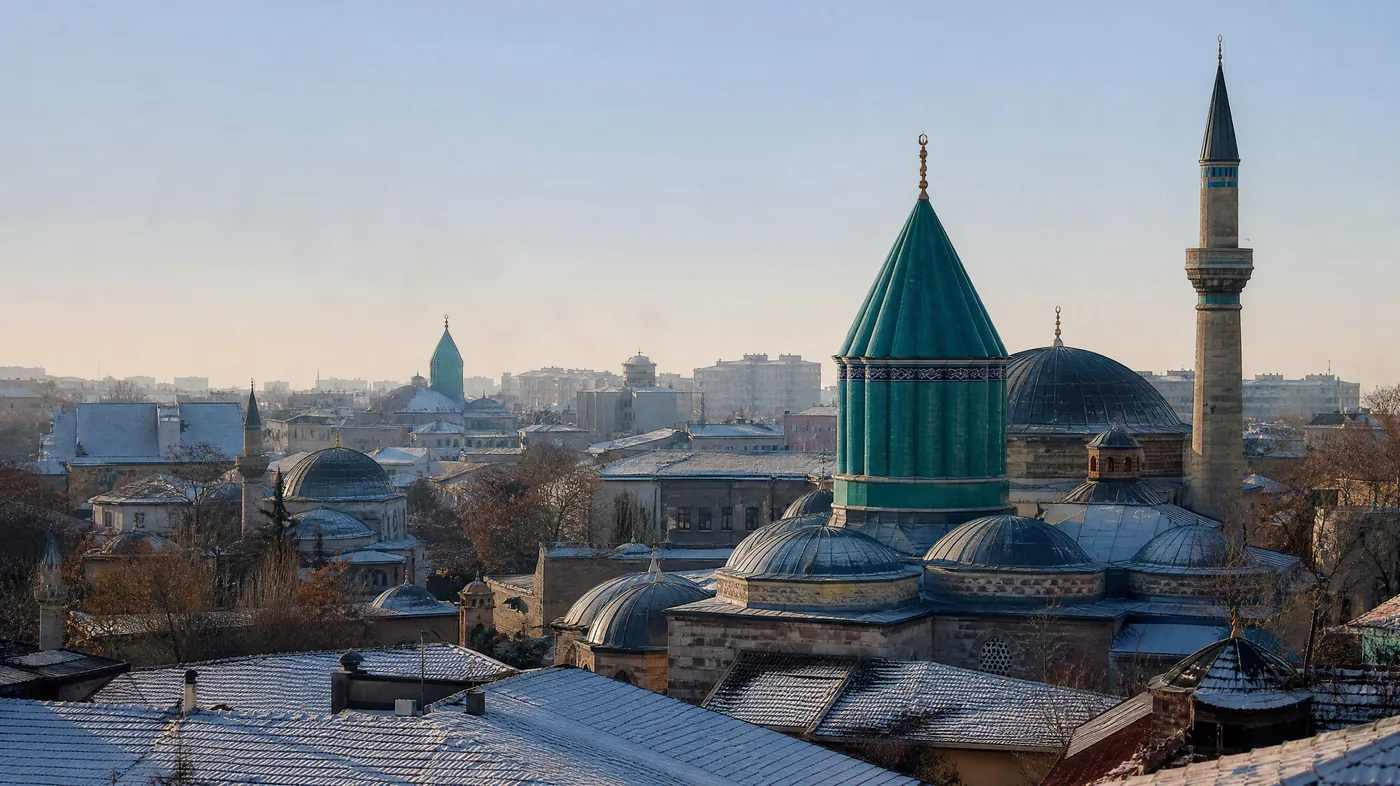
Today, UNESCO says, the Mevleviye "can be found in many Turkish communities throughout the world", and its most active centers are Konya and Istanbul. Rumi's poetry travels further still: Wikipedia notes it is read across Iran and Türkiye and translated into many languages. Our Konya guide covers his city.
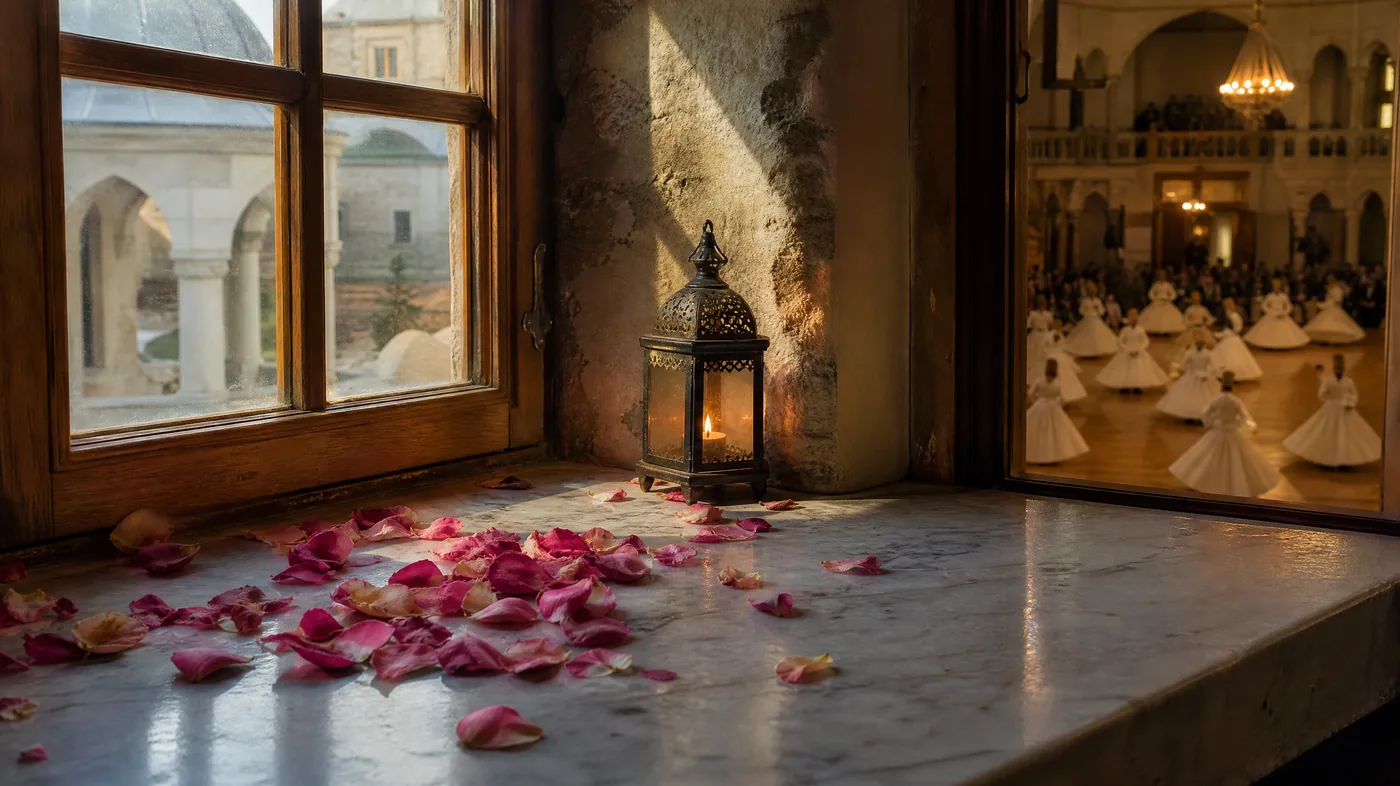
Do whirling dervishes still exist?
Yes. Turkey closed every Mevlevi lodge in 1925, but public ceremonies were allowed again in the 1950s, restrictions eased in the 1990s, and UNESCO listed the Sema in 2008.
UNESCO tells the story in a few lines. As a result of secularization policies all mevlevihane were closed in 1925. For about thirty years the tradition was kept alive quietly, with the focus on the music and songs. Today "some private groups are re-establishing the original spiritual and intimate character of the Sema ceremony."
- The leadership still passes through Rumi's descendants. Wikipedia names the current Çelebi as Faruk Hemdem Çelebi, president of the International Mevlana Foundation.
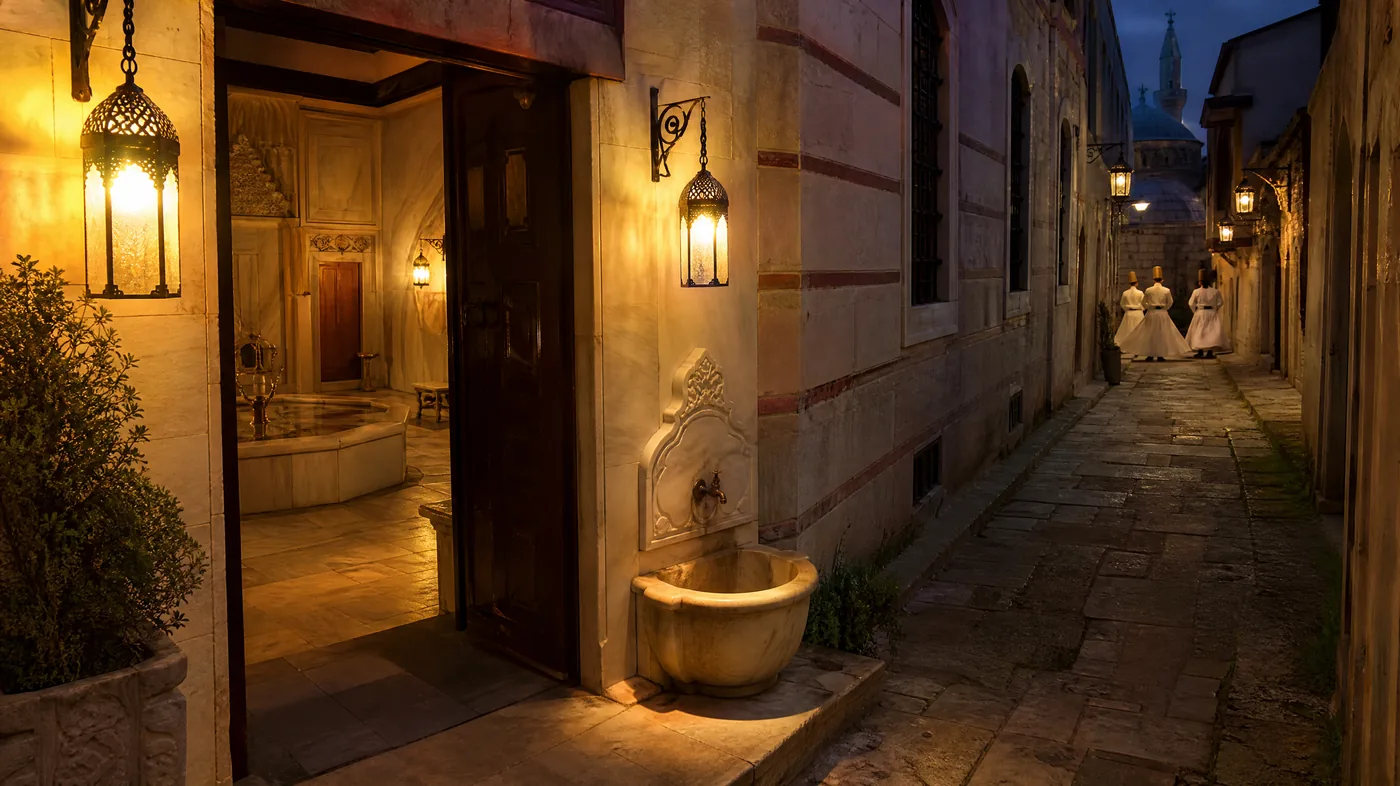
- The lodges are coming back to life. The ceremony in a real Mevlevi lodge is held in Kasimpasa Mevlevihanesi, founded in the 1620s and restored, per its listing.
- Abroad, Wikipedia records Mevlevi teachers and ceremonies in Europe and North America since the 1970s.
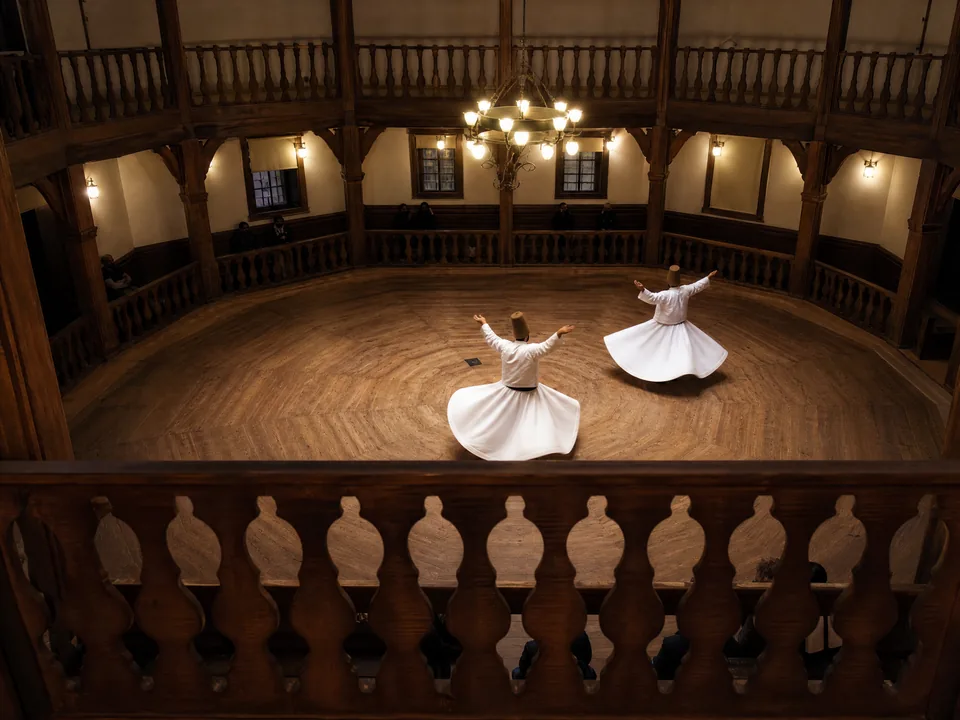
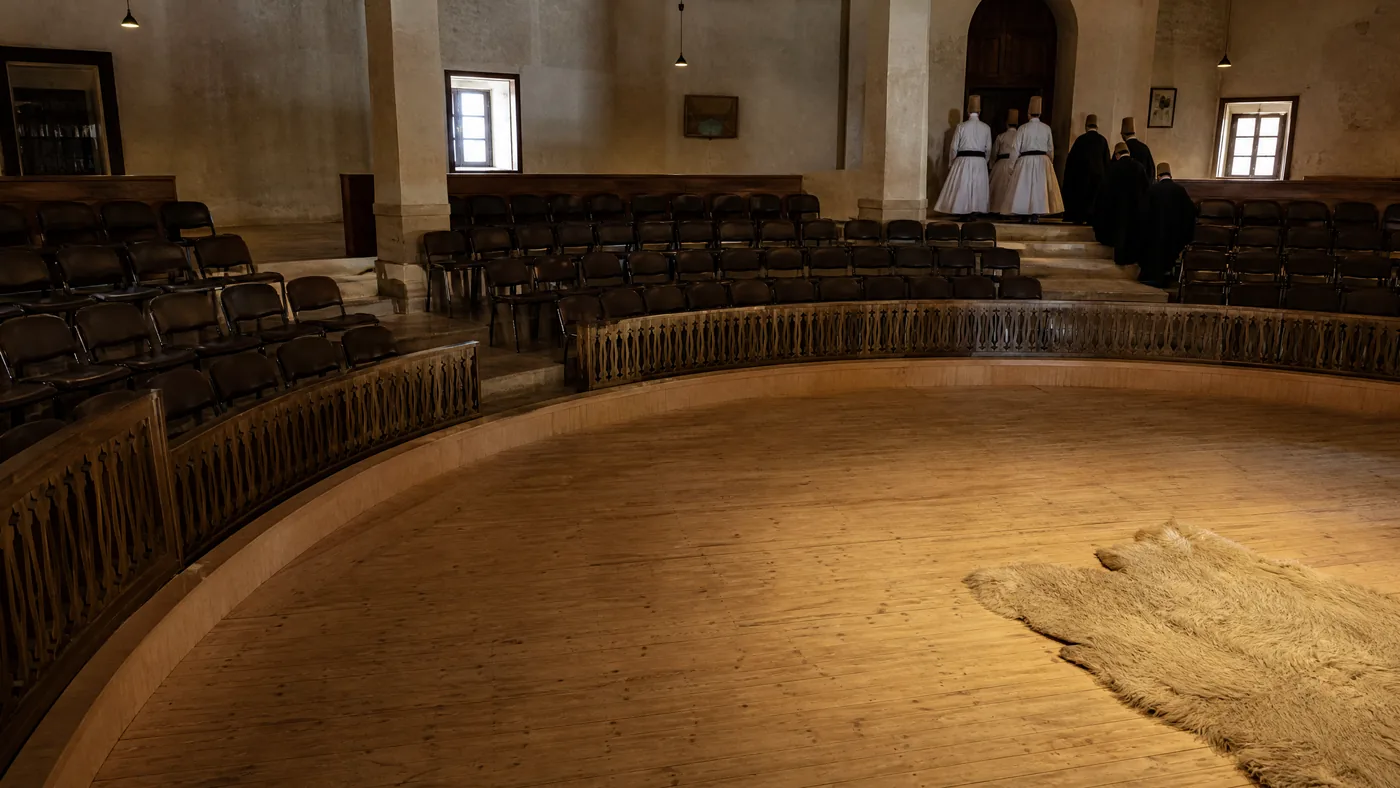
The Sema in one of Istanbul's earliest Mevlevi lodges, with a bilingual introduction by the resident sheikh, an exhibition and a booklet.
Explore the ceremony in a real Mevlevi lodge Tour detailsCan a woman be a whirling dervish?
In some groups, yes. Historically the ceremony was performed by men, and some communities now allow women to take part, per Wikipedia. Practice varies between groups.
The sources we could name:
- The early order: Wikipedia's Mevlevi article cites Camille Helminski's book Women of Sufism: Rumi had noted women students, and in the order's early days there were female shaikhs and semazens, such as Destina Khatun, appointed shaykha of a lodge in Kara Hisar.
- 1991: the same book reproduces a letter from Celaleddin Bakir Çelebi, then head of the order, granting permission for men and women to whirl together again in mixed Mevlevi ceremonies.
- Today: Wikipedia's article on Sufi whirling, citing CNN (2010), says some communities now allow women to participate.
At large public ceremonies the semazens are usually men. GoTürkiye describes the December Sema in Konya as the turning of "the white-robed men". Each group follows its own teachers on this.
What do dervishes believe?
That love is the way to God. A Mevlevi shaikh quoted by Wikipedia sums it up: Rumi tells us "to take the love of God to the forefront".
The Mevlevis "insist that love is central to Islam", in Wikipedia's words. The Sema is that idea in motion. GoTürkiye's explanation is that everything in the universe turns, from the planets to the blood in the body, "for this reason, Mevlevi Dervishes whirl with the love of God."
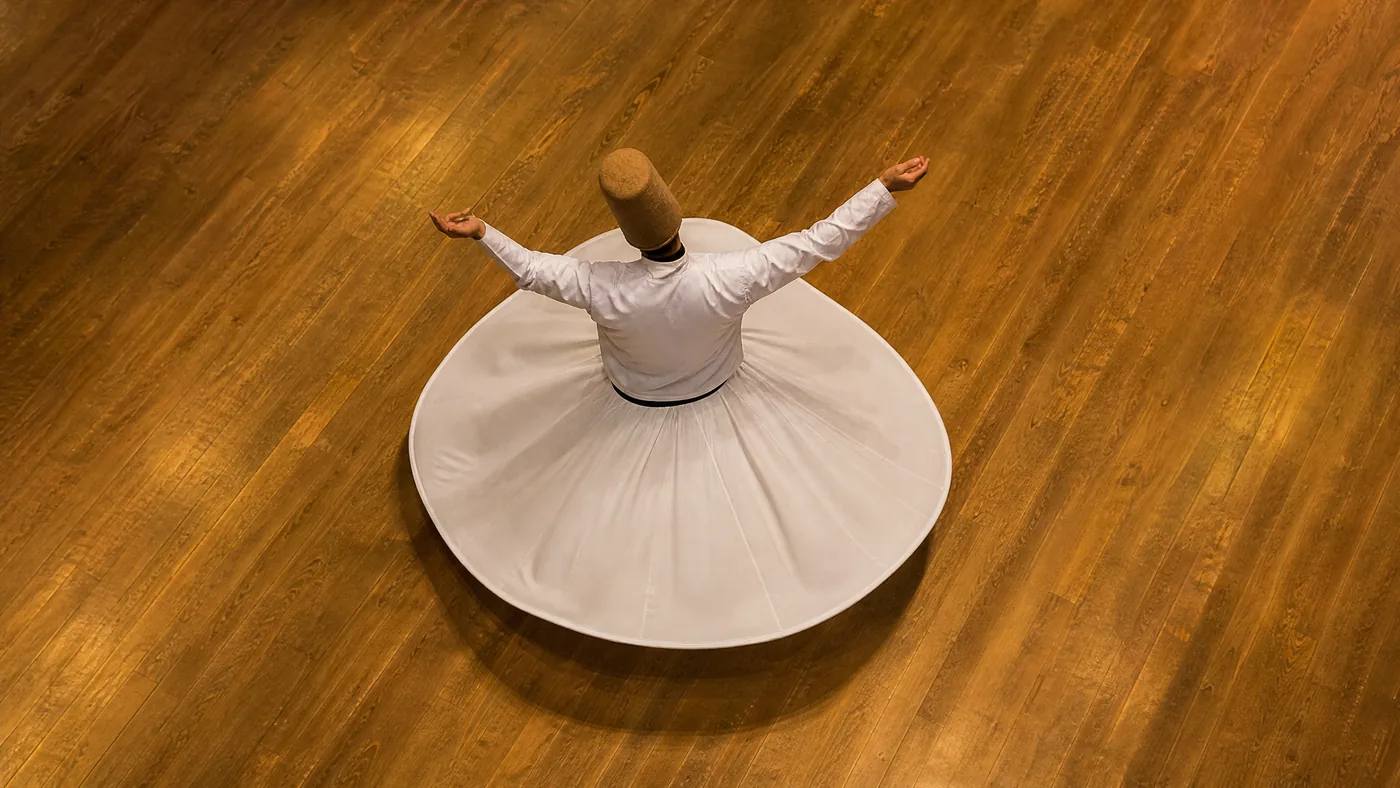
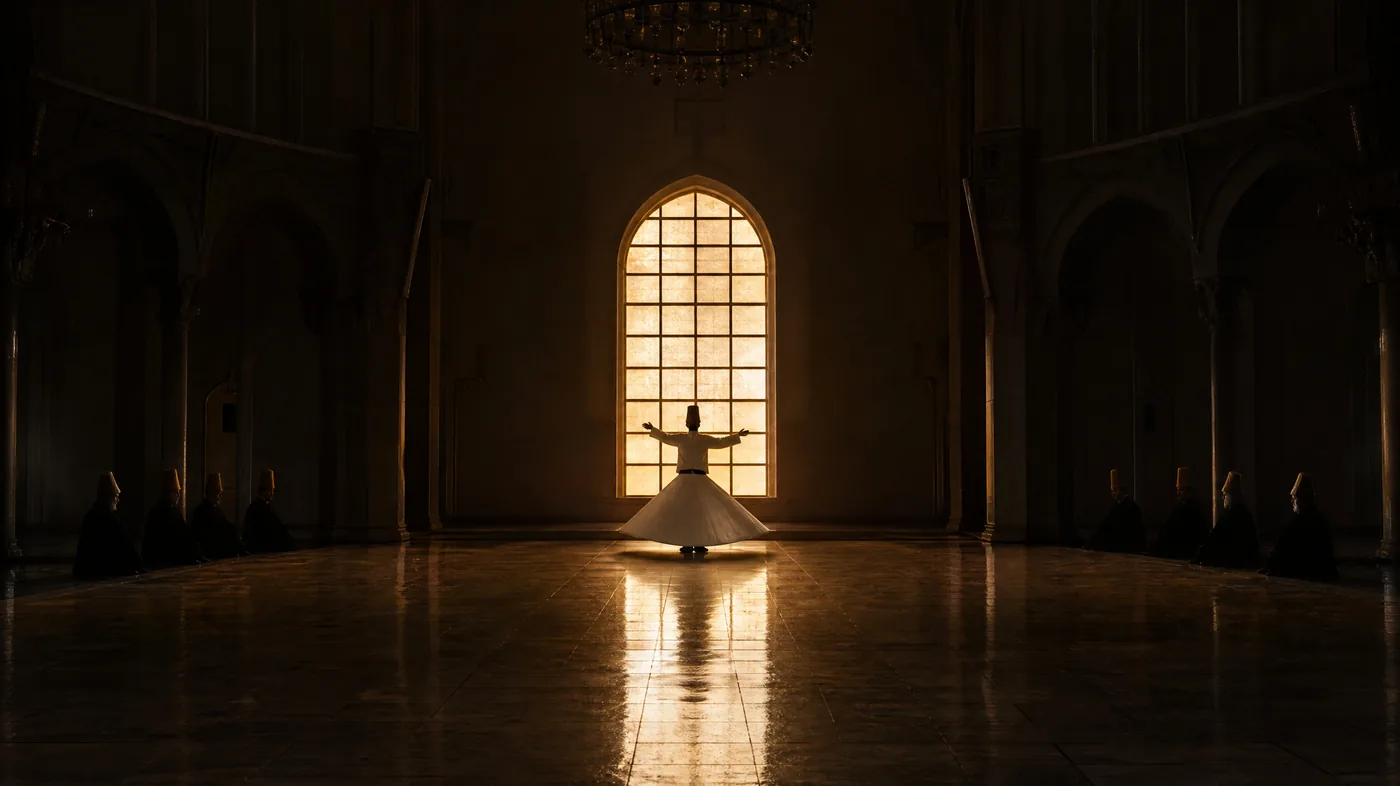
The posture carries the rest. Per Wikipedia, the dervish turns with the right palm up to receive grace from God and the left palm down to pass it to the earth, and with each turn says "Allah" inwardly. The black cloak dropped at the start stands for the grave, the tall hat for the tombstone of the ego, the white skirt for its shroud. Watch for the moment the cloaks fall: it is a rebirth.
How do you become a whirling dervish?
Traditionally, through 1,001 days of reclusive training in a Mevlevi lodge, per UNESCO. Today the path still runs through a teacher: Wikipedia says practicing Mevlevis study under a recognized shaikh.
UNESCO describes the old training: novices learned ethics, codes of behavior and beliefs by practicing prayer, religious music, poetry and dance, then "remained members of the order but returned to their work and families." A dervish was not a monk for life.
- Who teaches: shaikhs, who are appointed by the Çelebi, per Wikipedia.
- The turn itself: UNESCO describes it as rotating on the left foot in short twists, the right foot driving the body round, eyes open but unfocused.
- Where to start as a visitor: a ceremony in a lodge, where a teacher explains the ritual. Many lodges answer questions after the Sema.
There is no public course to sign up for, and that is the point: it is a spiritual discipline, learned in a community. For the whirling itself and how they stay balanced, read why the dervishes spin.
Watch the Sema where dervishes once trained: a 1620s Mevlevi lodge in Beyoglu.
Check dates for the ceremony in a real Mevlevi lodgeFrequently asked questions
What does dervish mean?
A member of a Sufi order. The word comes from the Persian darvish through the Turkish derviş, which Merriam-Webster translates literally as "beggar".
Is a whirling dervish a Sufi?
Yes. Whirling dervishes belong to the Mevlevi order, a Sufi order founded in Konya in 1273. Not every Sufi whirls, though.
Can women be whirling dervishes?
In some groups. Historically the ceremony was performed by men; Wikipedia notes early female semazens and says some communities now allow women. Practice varies.
How do you pronounce dervish?
DUR-vish, with the stress on the first syllable. Merriam-Webster writes it ˈdər-vish.
Ready to book
Choose your ceremony
Free cancellation up to 24 hours before on every option. Prices are from-prices in USD and move with the season.
Whirling Dervishes Ceremony in a Real Mevlevi Lodge
- Whirling dervishes ceremony
- Bilingual introduction
- Exhibition access
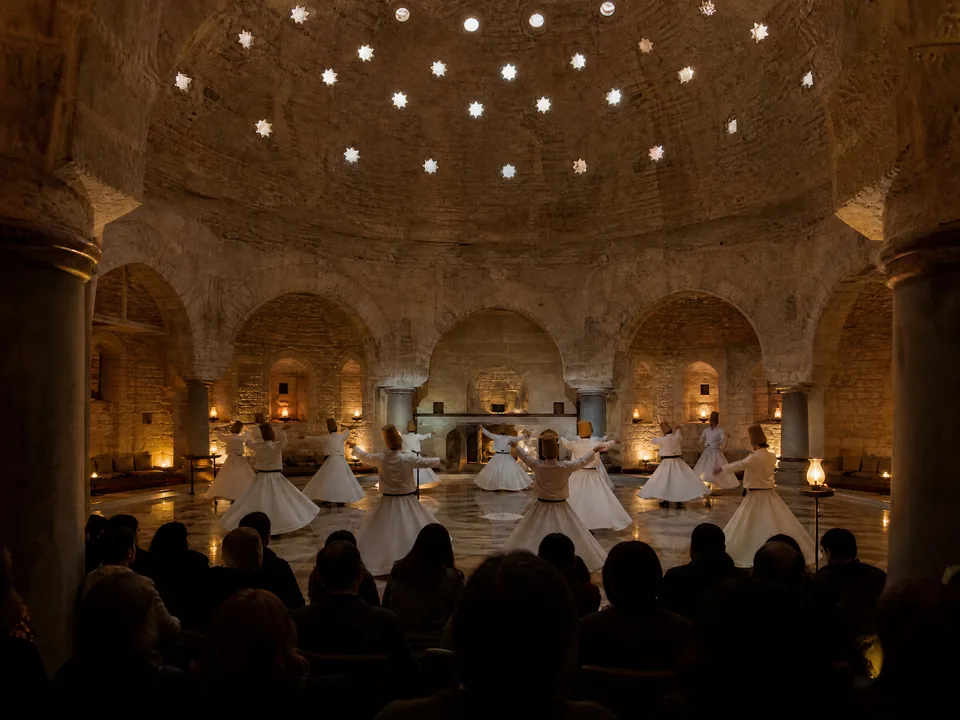
HodjaPasha Whirling Dervishes Ceremony & Exhibition
- Sema ceremony ticket
- Program booklet
- Bottled water
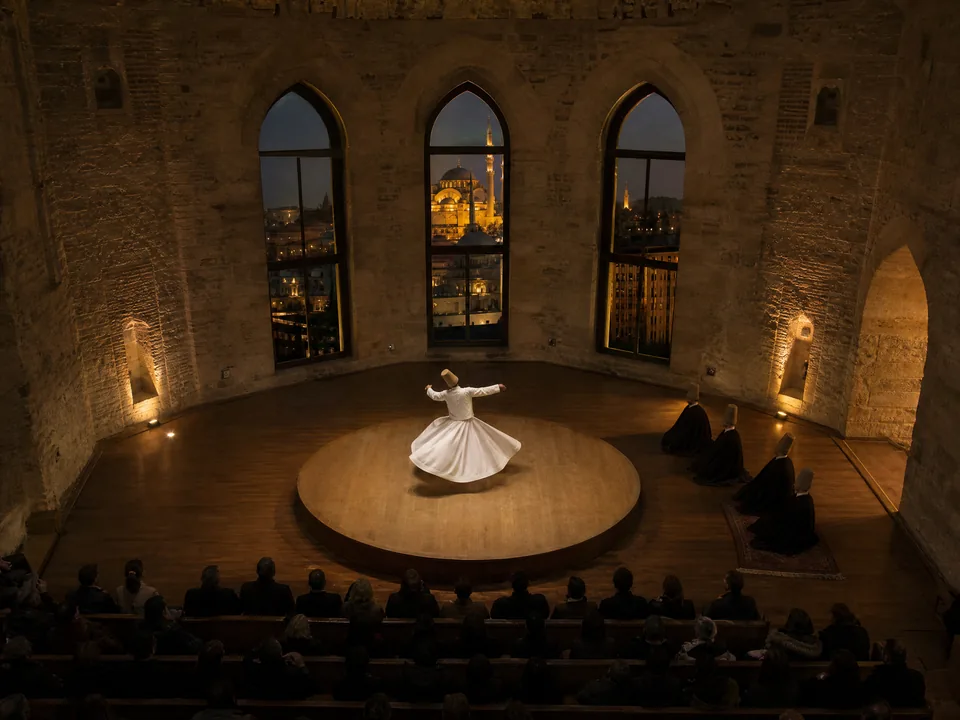
Whirling Dervish Ceremony next to Hagia Sophia
- Ceremony entry with live music
- Tea or sherbet and water
- Smart audio guide in 8 languages