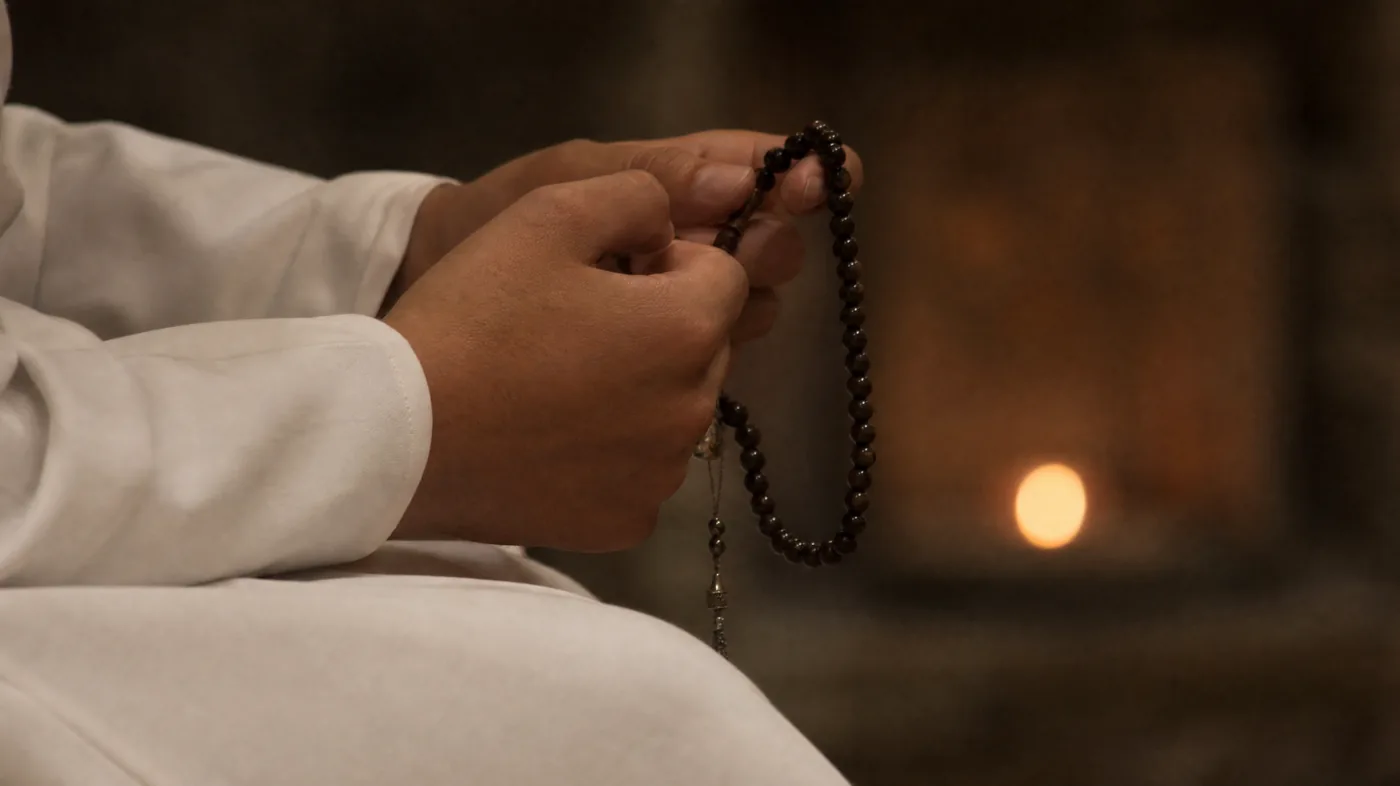
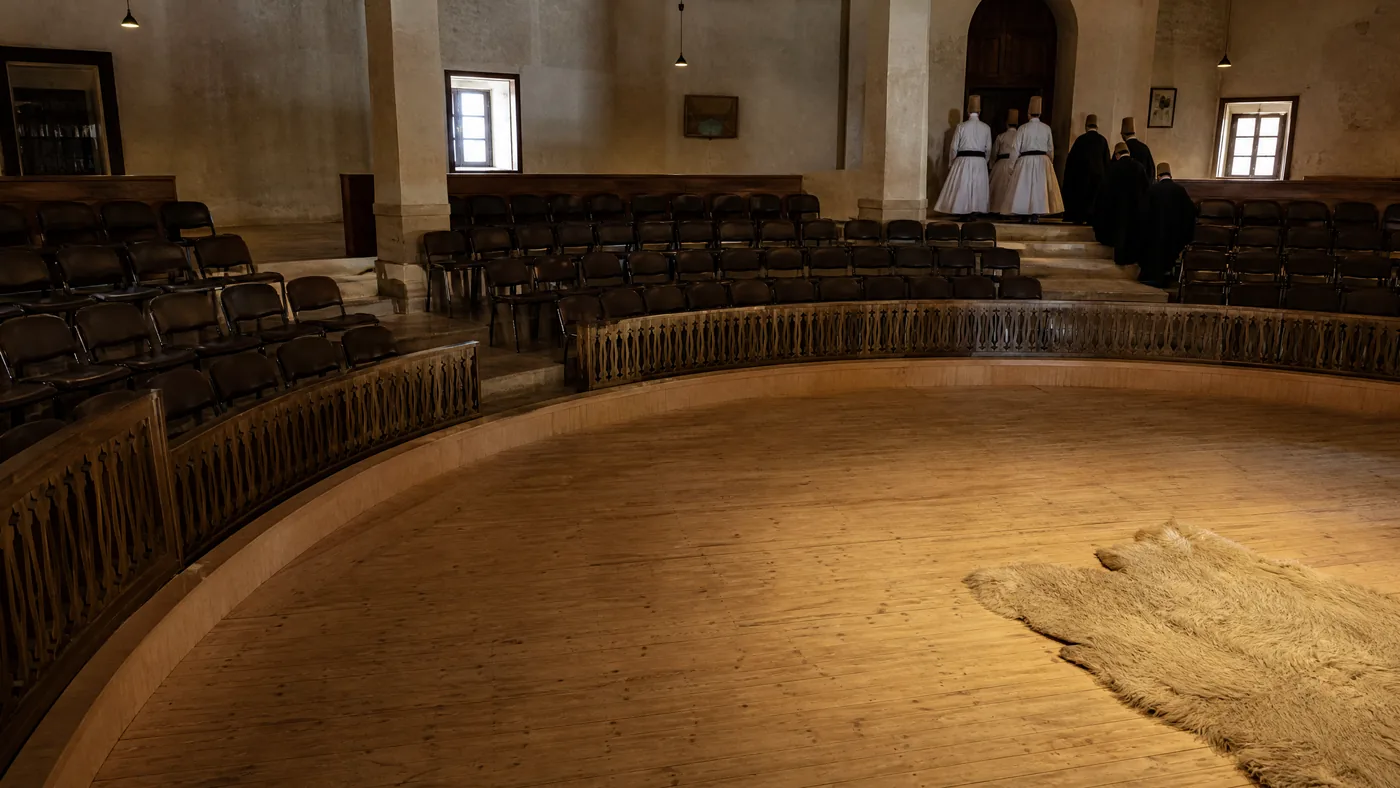
Booking choice: The ceremony next to Hagia Sophia, from $15 per person. Check dates Tour details
Nobody expects visitors to know the Mevlevi rules. The venues tell you the essentials, and the rest is the courtesy you would show at any service: arrive on time, stay quiet, stay seated. The details differ a little from one hall to the next, mostly on photos, ages and seats.
This guide goes through them in the order you meet them. Venue rules come from each listing and from HodjaPasha's own site; the general advice is ours and labeled as such.
The quick answer
Treat it as a religious ceremony, because it is one. Switch your phone off, take no photos or video during the ritual, and do not clap at the end; most venues ask for exactly that. HodjaPasha has no dress code, the Kasimpasa lodge recommends modest clothing, and HodjaPasha admits children from age 7. Book early for a better seat at HodjaPasha, where seats follow booking order, and check in 30 minutes before.
Is the whirling dervish show a ceremony or a show?
A ceremony. HodjaPasha's own FAQ says "It is a spiritual ceremony that contains religious symbols", and GoTürkiye calls the Sema a mystical ceremony with religious elements, themes and detailed rules.
"Show" is the word most people search for, and you will see it on tickets, including on this site. It is fine to use. Inside the hall, though, the dervishes are praying, the sheikh leads them, and the music is sacred. UNESCO notes that many ceremonies today are performed for visitor audiences, shortened and simplified; the ritual at the core is the same one.
That is the whole key to the etiquette. Behave as you would at a service in any faith, and you will do everything right. Silvia, at the hall next to Hagia Sophia in Nov 2026: "An intimate and distinctive ceremony, a lovely moment."
What happens at a whirling dervish ceremony, step by step?
Music first, then the dervishes enter in black, walk the floor, drop their cloaks and whirl in four movements. Prayers close the ceremony, and the dervishes leave in silence.
- Before: check in, find a seat and, at several venues, read the booklet or listen to an introduction. At the Hagia Sophia hall a host explains the ritual; at the lodge the resident sheikh does.
- The music: HodjaPasha's listing describes a classical Turkish music concert to open the program. Listen for the ney, the reed flute.
- The entry: the dervishes and the sheikh take their places. A hymn to the Prophet follows.
- The walk: the dervishes circle the floor in single file, bowing to one another, then take off the black cloaks.
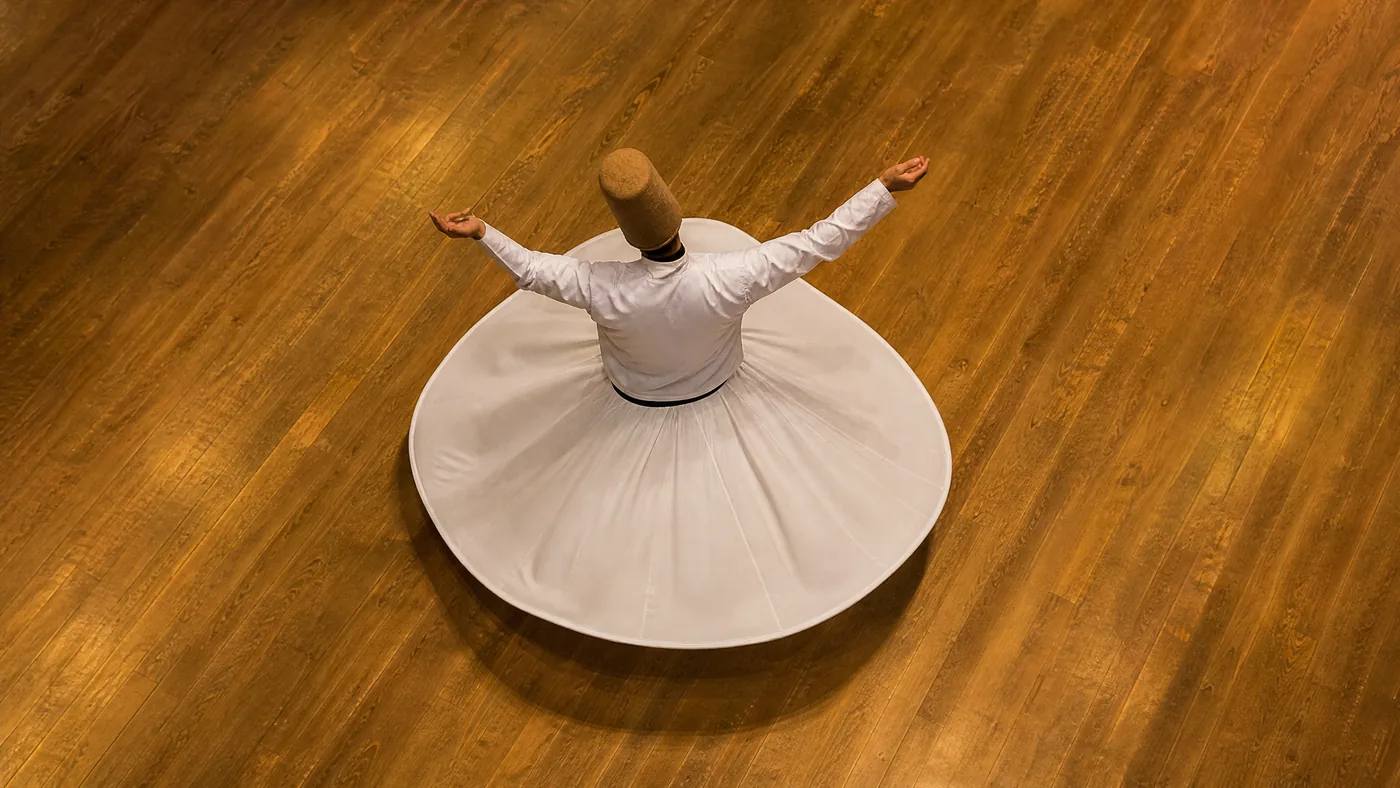
- The whirling: four movements, the selams, with the music rising and falling between them.
- The close: prayers, and the dervishes file out. Wait until they have left before you stand.
Our tip: sit still through the quiet moments between movements. They are part of the ceremony, not a pause for photos.
A host explains the ritual before and after, with live music, tea or sherbet and an audio guide.
Check dates for the ceremony next to Hagia SophiaCan you take photos or video at a whirling dervish ceremony?
Not during the ritual. HodjaPasha and the Kasimpasa lodge prohibit photos and video during the ceremony; some venues, mostly in Cappadocia, set aside a short moment at the end for pictures.
The listings are clear. HodjaPasha allows no photography inside during the ceremony (it is possible without flash at its other show, Rhythm of the Dance). The lodge lists photography, video and applause as prohibited during the ceremony, and flash and video recording as not allowed. The Motif Cultural Centre ceremony in Cappadocia does not allow flash photography, and reviewers there and at the Cappadocia ceremony with pickup describe a short slot for photos once the ritual ends.
If a venue offers that moment, the host will say so. Until then, the phone stays in your pocket, screen down and silent. A lit screen in a dark hall is the one thing everyone notices.
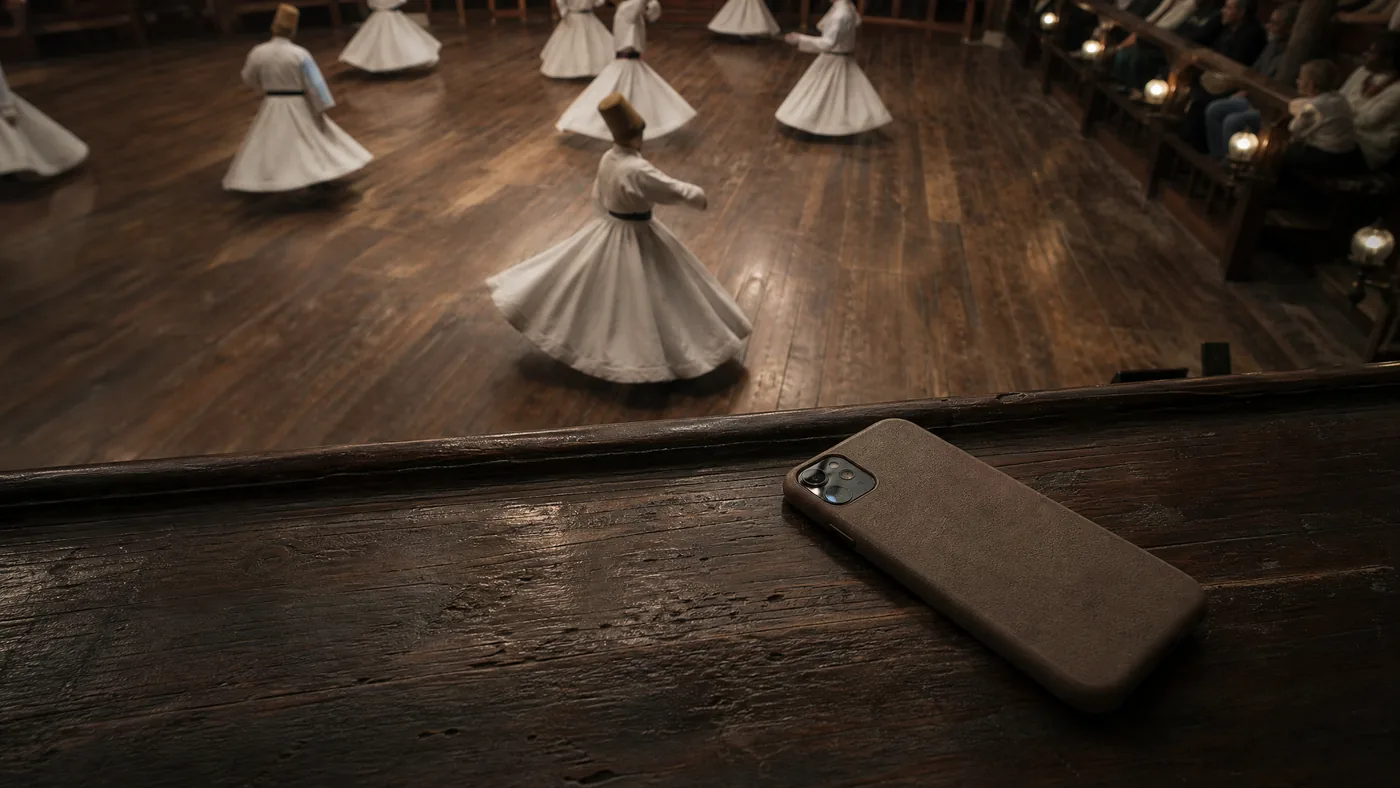
Should you clap at the end of a whirling dervish ceremony?
No. Most venues ask you not to clap: HodjaPasha prohibits applause during the ceremony, and the Kasimpasa lodge prohibits it outright.
It feels odd, after an hour like that, to stay silent. But the Sema ends in prayer, not with a curtain call, and applause would cut into it. Let the dervishes leave the floor and the hall settle. If the host invites questions afterwards, as at the lodge and the Hagia Sophia hall, that is the moment to show how much you enjoyed it.
The same goes for talking. HodjaPasha's site puts it in one line: "Sema ceremony requires silent and tranquil atmosphere." The Hagia Sophia hall lists making noise as not allowed.
Every evening at 7pm in a 15th-century hamam, with a booklet that explains each part of the ceremony.
Check dates for the HodjaPasha ceremonyWhat should you wear to a Sema ceremony?
There is no strict rule at most venues: HodjaPasha has no dress code. The Kasimpasa lodge recommends modest clothing out of respect.
Our general advice: dress as you would for a place of worship. Shoulders and knees covered is an easy default, and nobody will mind a scarf. Shorts and a vest top are not forbidden at a culture center, but at a working lodge they sit badly with the room.
A light layer is useful too. The halls range from a hamam under a dome to a Byzantine cistern underground, and the temperature inside does not always match the street.
Can children attend a whirling dervish ceremony?
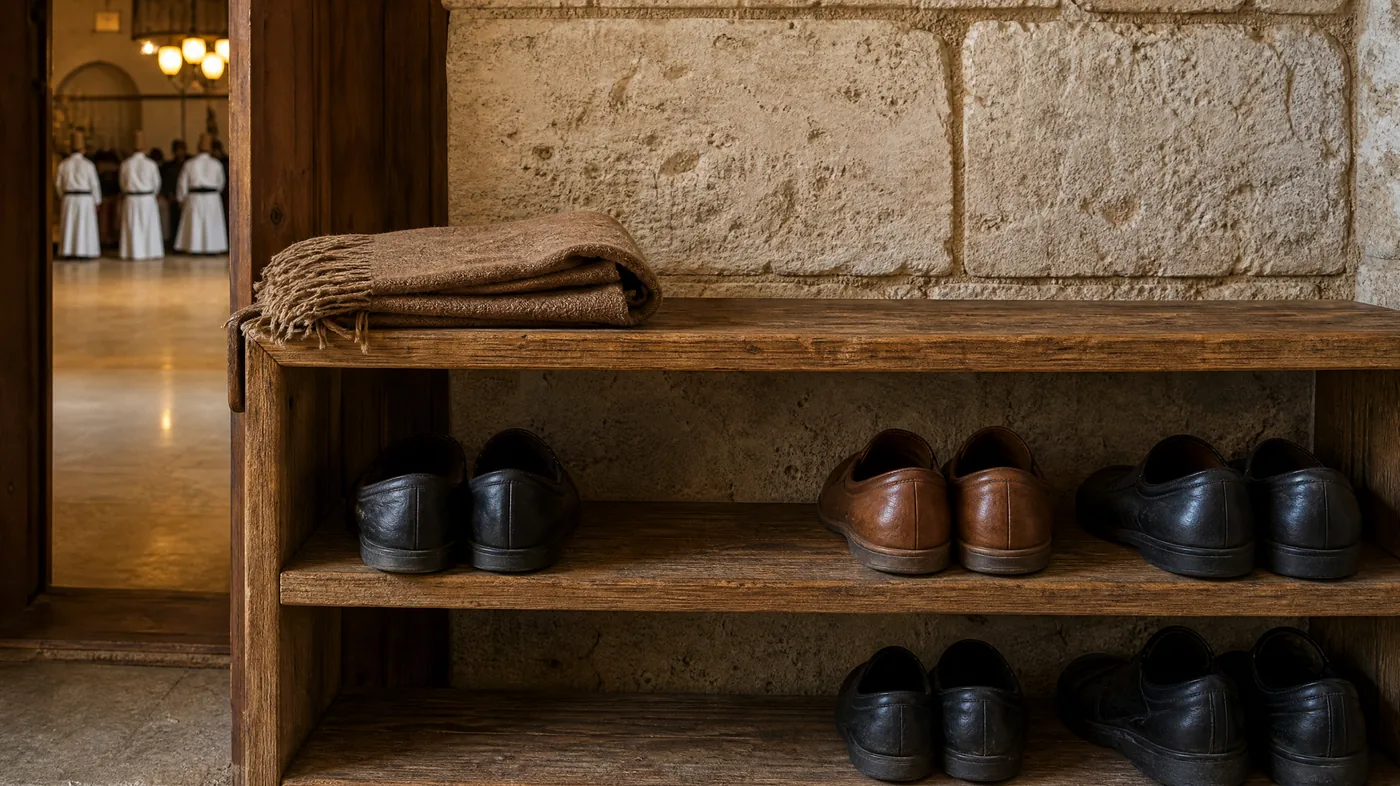
Yes, with age limits at some venues. HodjaPasha admits children from age 7, the Motif Cultural Centre ceremonies in Cappadocia say not under 7, and the Hagia Sophia hall says not under 2.
- HodjaPasha: minimum age 7, per its site.
- The Hagia Sophia hall: not suitable for children under 2, per the listing.
- Cappadocia: the Motif ceremony and the ceremony with dinner are not suitable under 7; the Motif listing also names pregnant women and people with back problems, and the ceremony with pickup says not suitable for pregnant women.
Age limits aside, think about the child. An hour of slow music and silence is a lot to ask of a young one. For a lively family evening in the same hamam, HodjaPasha itself recommends Rhythm of the Dance for an entertaining show.
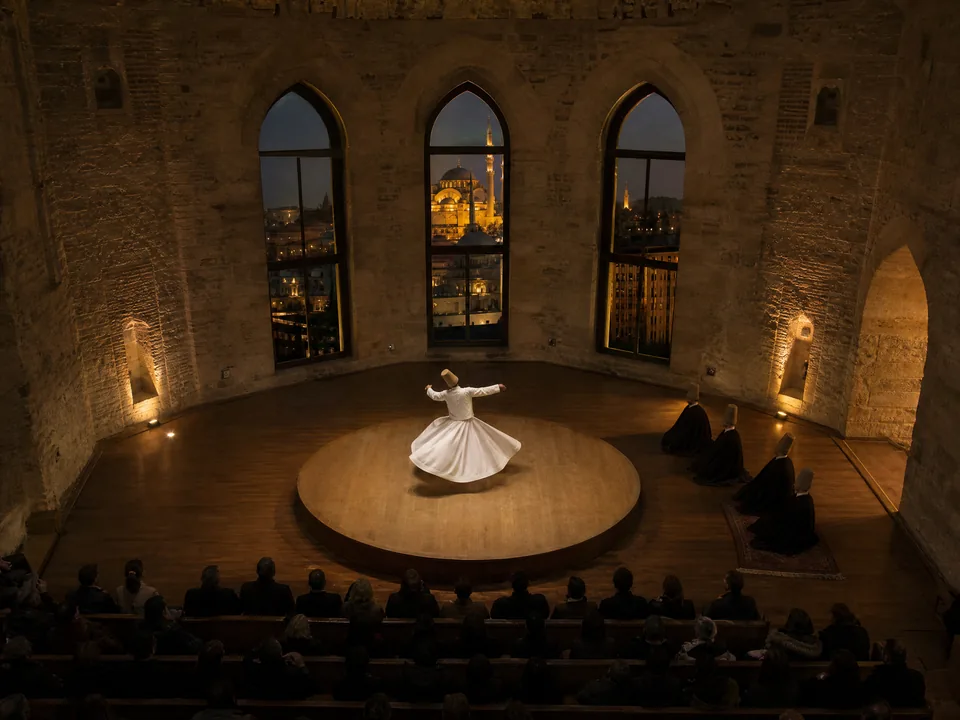
55 minutes steps from Hagia Sophia, with a host, tea or sherbet and an audio guide in 8 languages: a good first Sema.
Explore the ceremony next to Hagia Sophia Tour detailsWhen should you arrive, and where should you sit?
15 to 30 minutes before the start. HodjaPasha opens check-in 30 minutes before and seats on a first-booked, first-served basis; Hoca Rüstem Medrese asks you to be in the hall 15 minutes early.
At HodjaPasha, seats follow booking order, not arrival time, so book early for a better seat and check in 30 minutes before; the dervish exhibition fills the wait. At Hoca Rüstem Medrese, bring headphones and a charged phone for the audio guide app. At the Hagia Sophia hall, the listing asks you to visit the restroom before or after the ceremony, not during it.
Where to sit: anywhere with a clear view of the whole floor. The dervishes turn in a circle, so a seat at the front is not always the best one; slightly raised and central works well. Plan to stay to the end. Lengths run from 45 minutes at the cistern to 1 hour at HodjaPasha, the lodge and the medrese.
What are the rules at each whirling dervish venue?
They overlap: silence, no photos during the ritual, no applause. Ages, dress advice and access differ, as listed below.
The rules per venue, from each listing and, for HodjaPasha, its own site:
| Venue | Photos and video | Applause and noise | Ages | Arrive | Good to know |
|---|---|---|---|---|---|
| HodjaPasha | Not allowed during the ceremony | Talking and applause prohibited | 7+ | Check-in 30 min before | No dress code; not suitable for wheelchairs |
| Kasimpasa lodge | Prohibited; no flash, no video | Applause prohibited; phones silent | Not stated | Not stated | Modest clothing recommended; elevator on site |
| Hagia Sophia hall | Not stated | Making noise not allowed | Not under 2 | Not stated | Restroom before or after |
| Hoca Rüstem Medrese | Not stated | Not stated | Not stated | 15 min before | Bring headphones and a charged phone |
| Binbirdirek Cistern | Not stated | Not stated | Not stated | Not stated | No alcohol; not suitable for wheelchairs |
| Motif, Cappadocia | No flash | Not stated | Not under 7 | Not stated | No smoking |
Where a listing does not state a rule, follow the general ones: phone off, no photos until invited, no clapping. The staff on the night have the last word. After the ceremony, some halls serve tea or sherbet; the Hagia Sophia hall and the Motif ceremony include it.
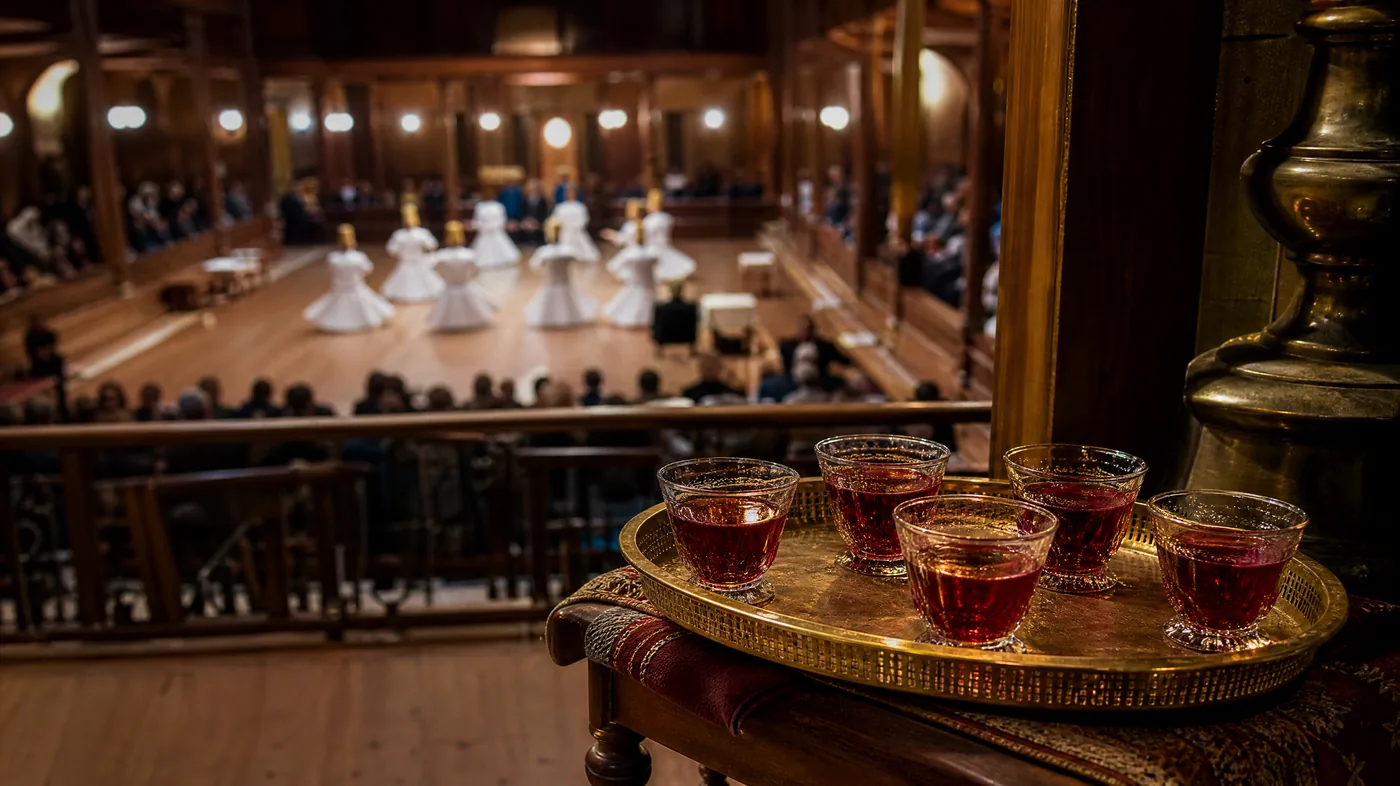
A Sema in a Mevlevi lodge founded in the 1620s, with a bilingual introduction by the resident sheikh.
Check dates for the ceremony in a real Mevlevi lodgeFrequently asked questions
Can I leave during a whirling dervish ceremony?
Try not to. The ceremonies last 40 minutes to an hour, and the Hagia Sophia hall asks guests to visit the restroom before or after. If you must leave, wait for a pause in the music and go quietly.
Is there a dress code at HodjaPasha?
No, HodjaPasha's site says there is no dress code. The Kasimpasa lodge recommends modest clothing out of respect, and dressing as for a place of worship is a sensible default anywhere.
Can I talk during the Sema?
No. HodjaPasha prohibits talking during the ceremony and says the Sema requires a silent and tranquil atmosphere. Save questions for the end, when some hosts answer them.
Are whirling dervish venues wheelchair accessible?
Some are. The Kasimpasa lodge has an elevator and is listed as wheelchair accessible. HodjaPasha and Binbirdirek Cistern are listed as not suitable for wheelchair users.
Ready to book
Choose your ceremony
Free cancellation up to 24 hours before on every option. Prices are from-prices in USD and move with the season.
Whirling Dervish Ceremony next to Hagia Sophia
- Ceremony entry with live music
- Tea or sherbet and water
- Smart audio guide in 8 languages
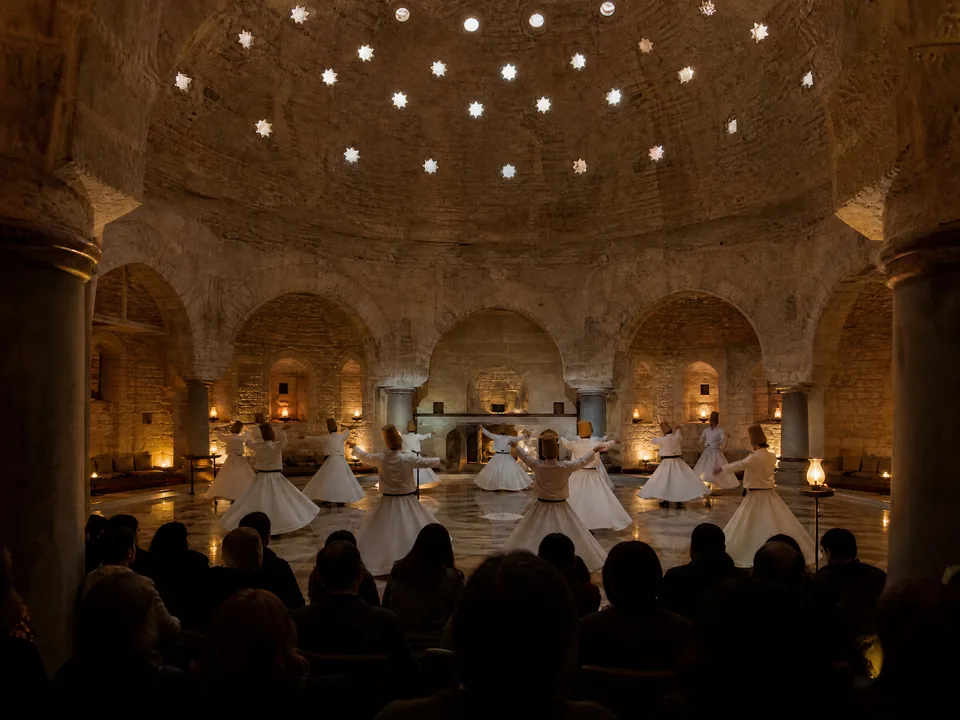
HodjaPasha Whirling Dervishes Ceremony & Exhibition
- Sema ceremony ticket
- Program booklet
- Bottled water
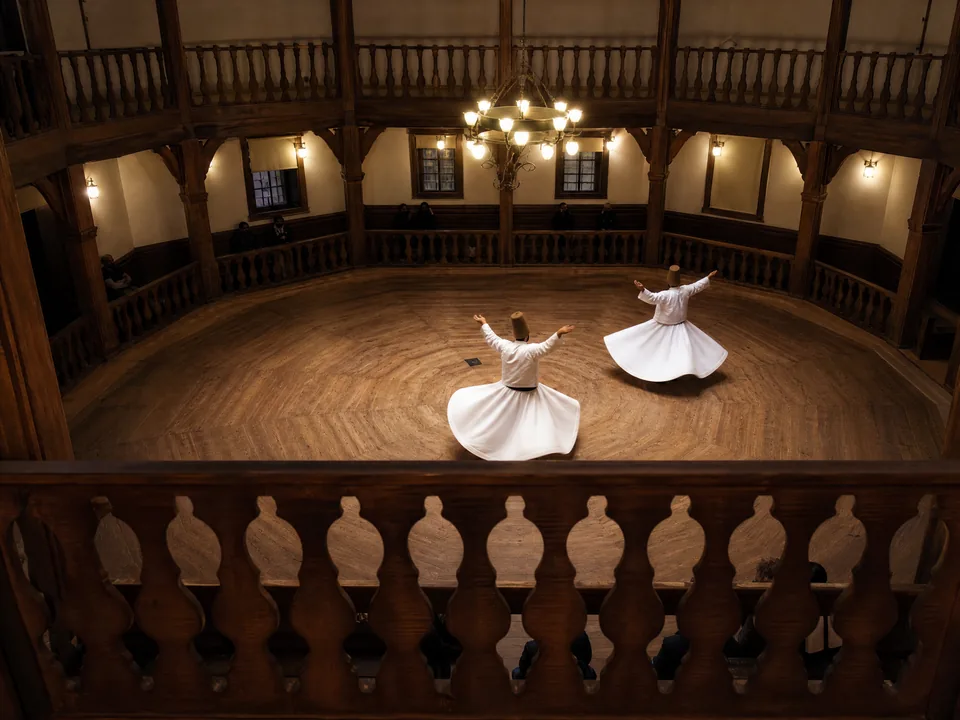
Whirling Dervishes Ceremony in a Real Mevlevi Lodge
- Whirling dervishes ceremony
- Bilingual introduction
- Exhibition access