Booking choice: The HodjaPasha ceremony, from $32 per person. Check dates Tour details
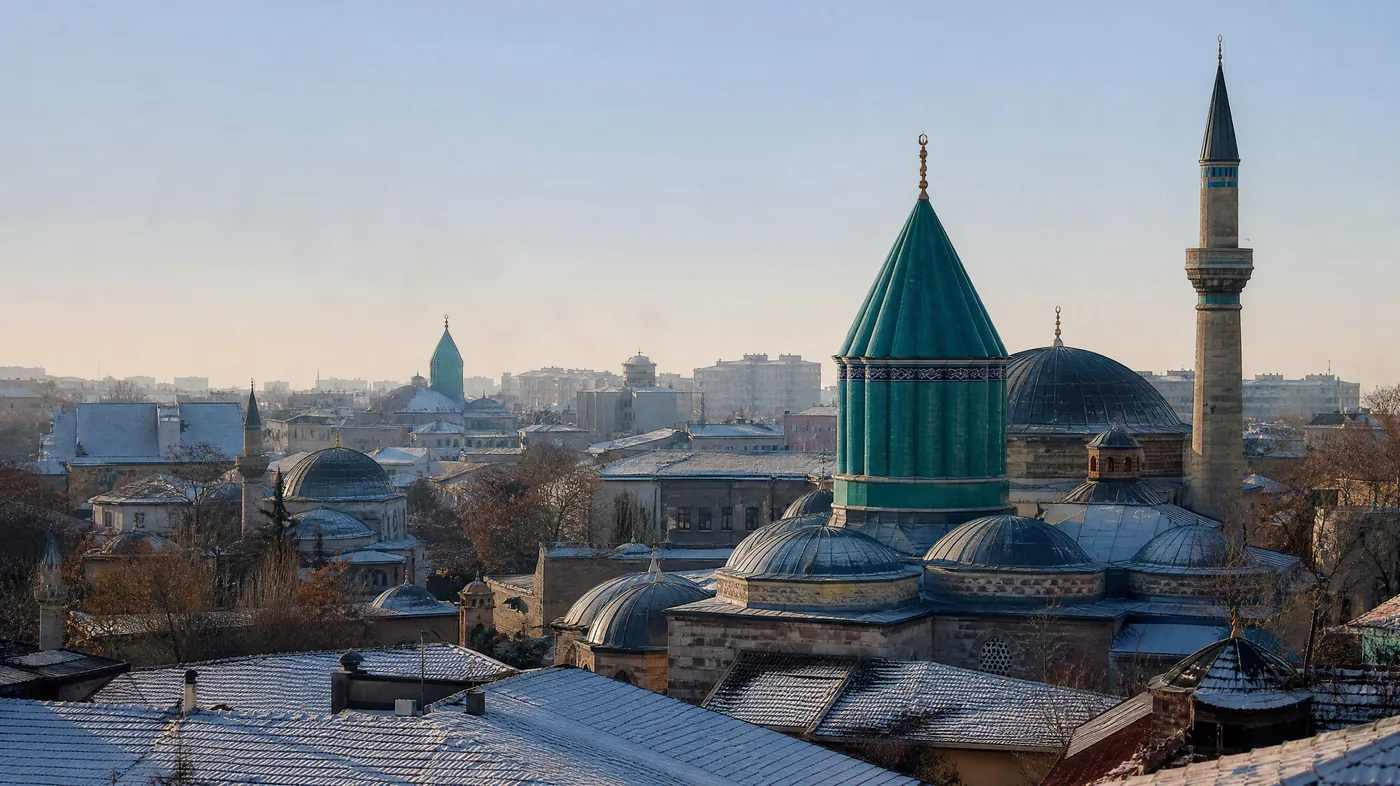
Ask in Türkiye which city belongs to the whirling dervishes and the answer is always the same. Konya, on the steppe of central Anatolia, was the Seljuk capital when Rumi arrived in 1228, and the order his followers founded after his death in 1273 grew from here across the Ottoman world. His tomb under the green dome is now the Mevlana Museum, and the modern Mevlana Cultural Center next door hosts the Sema every December for Şeb-i Arus.
One plain note before you plan: every ceremony you can book on this site takes place in Istanbul or Cappadocia, not in Konya. Konya's December ceremonies sell through their own ticket channel, which we cover below with the official dates from the Konya Provincial Directorate of Culture and Tourism.
The quick answer
Konya is the city of the whirling dervishes: Rumi lived and died here, and the Mevlevi order was founded here in 1273. The 753rd Şeb-i Arus runs from 7 to 17 December 2026 in the Sema Hall of the Mevlana Cultural Center, with tickets on biletinial.com since 9 October 2026. Outside December, or if Konya is off your route, the HodjaPasha ceremony in Istanbul runs every evening at 7pm, from $32.
Which city is known for its whirling dervishes?
Konya. GoTürkiye calls it "The City of the Whirling Dervishes", and UNESCO names Konya and Istanbul as the most active centers of the Mevlevi order today.
The reason is history. Konya was the capital of the Seljuk Turks from the 12th to the 13th centuries, per GoTürkiye, and in that period the mystic Mevlana Celaleddin-i Rumi founded the Sufi order known in the West as the whirling dervishes. UNESCO describes the Mevleviye as an ascetic Sufi order founded in 1273 in Konya, "from where it gradually spread throughout the Ottoman Empire."
- Konya holds the tomb, the old lodge (now the Mevlana Museum) and the December commemoration.
- Istanbul has the most ceremonies to choose from on any night of the week, in a hamam, a working lodge, an Ottoman college and a cistern.
- Cappadocia adds evening ceremonies in cave and caravanserai halls, a short ride from the balloon towns.
Turkish people have a saying for it, quoted by GoTürkiye: "Travel the world, see Konya!"
Who was Rumi, and why is he buried in Konya?
A 13th-century scholar, poet and mystic, born on 30 September 1207 in Balkh, in today's Afghanistan. His family settled in Konya on 3 May 1228 at the invitation of the Seljuk ruler, and he died there on 17 December 1273.
HodjaPasha's biography of Mevlana tells the journey. His father, Bahaeddin Veled, was a scholar known as Sultan-i Ulema, "the sultan of scholars". A clash with the philosopher Fahreddin-i Razi and the approaching Mongol invasion pushed the family out of Balkh, and they moved through Baghdad, Mecca, Medina, Damascus, Malatya, Erzincan and Karaman before Sultan Alaeddin Keykubad invited them to Konya.
The rest of the story, per Wikipedia's article on Rumi:
- Teacher first. Rumi took over his father's madrasa and taught and preached in Konya.
- 15 November 1244. He met the wandering dervish Shams of Tabriz, and the friendship changed his life and began his poetry.
- The Masnavi. His long poem in Persian, often called one of the greatest poems of the language.
- 17 December 1273. He died in Konya and was buried beside his father. Christians and Jews joined the crowd at his funeral.
Wikipedia gives a few details differently (it places his birth in Wakhsh, near Balkh, and the arrival in Konya on 1 May 1228). The name Rumi itself means "from Rum", the old name for Anatolia. In Türkiye he is simply Mevlana, "our master".
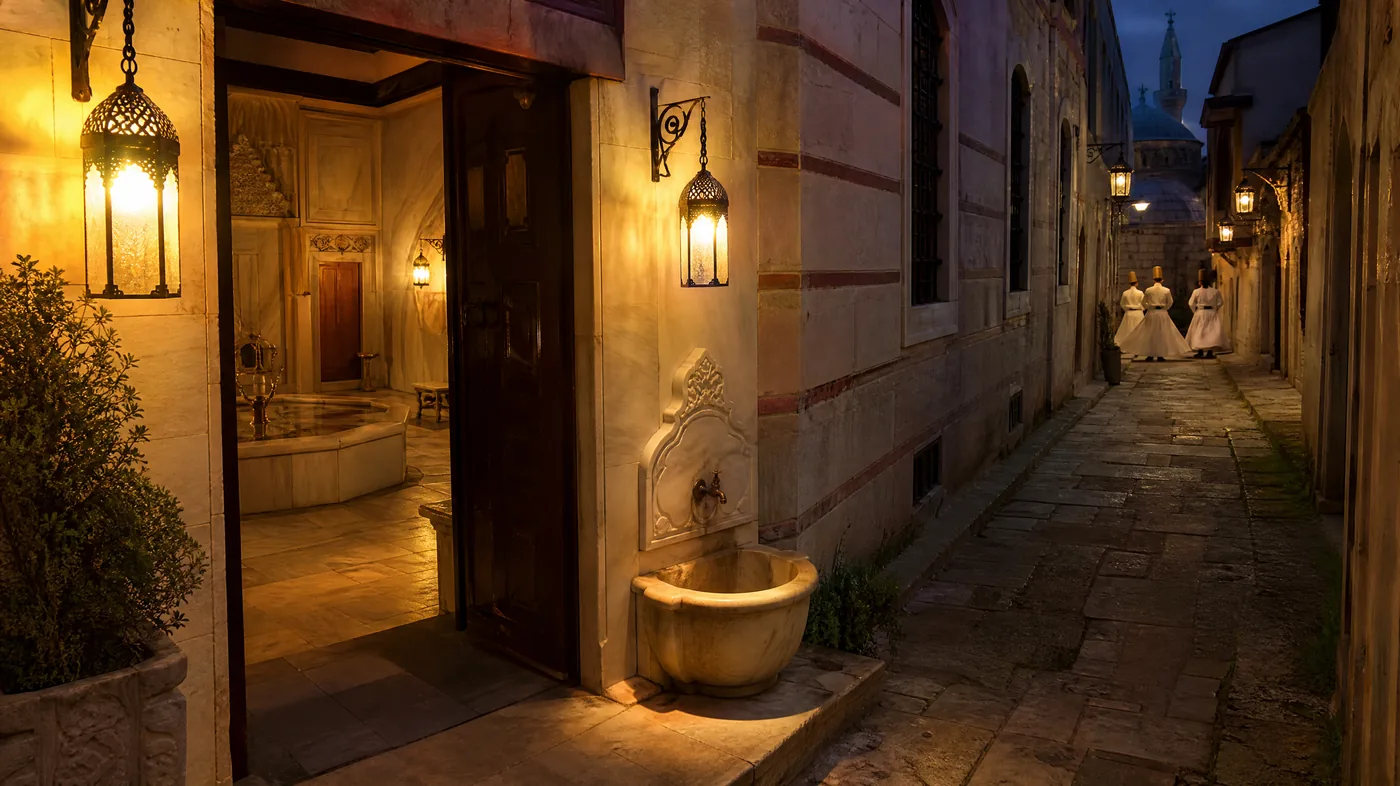
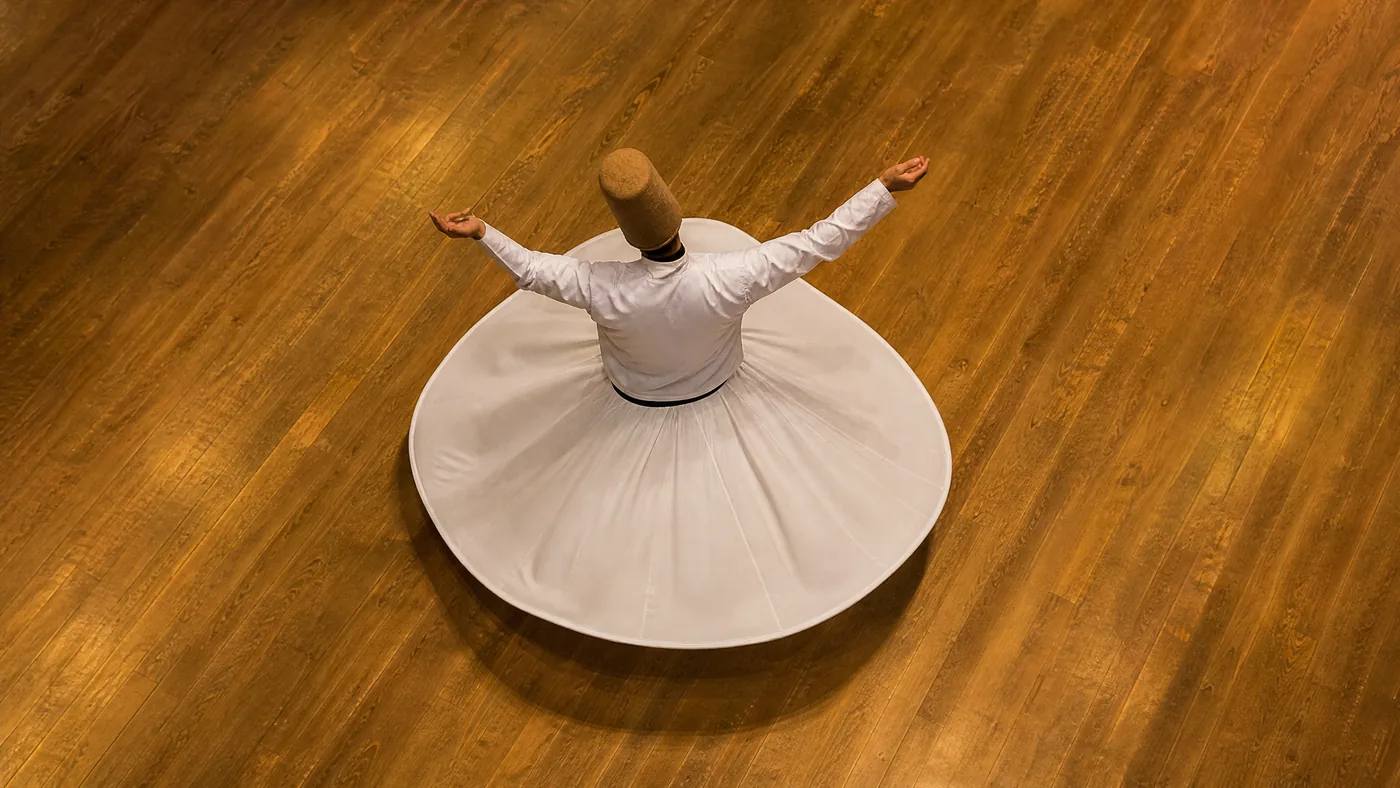
Rumi's ceremony every evening at 7pm, under the dome of a 15th-century hamam in Istanbul's old city.
Check dates for the HodjaPasha ceremonyWhat is inside the Mevlana Museum?
Rumi's tomb under the green-tiled dome, and the former dervish lodge attached to it, which GoTürkiye says now houses manuscripts of his works and objects from the order's mystic life.
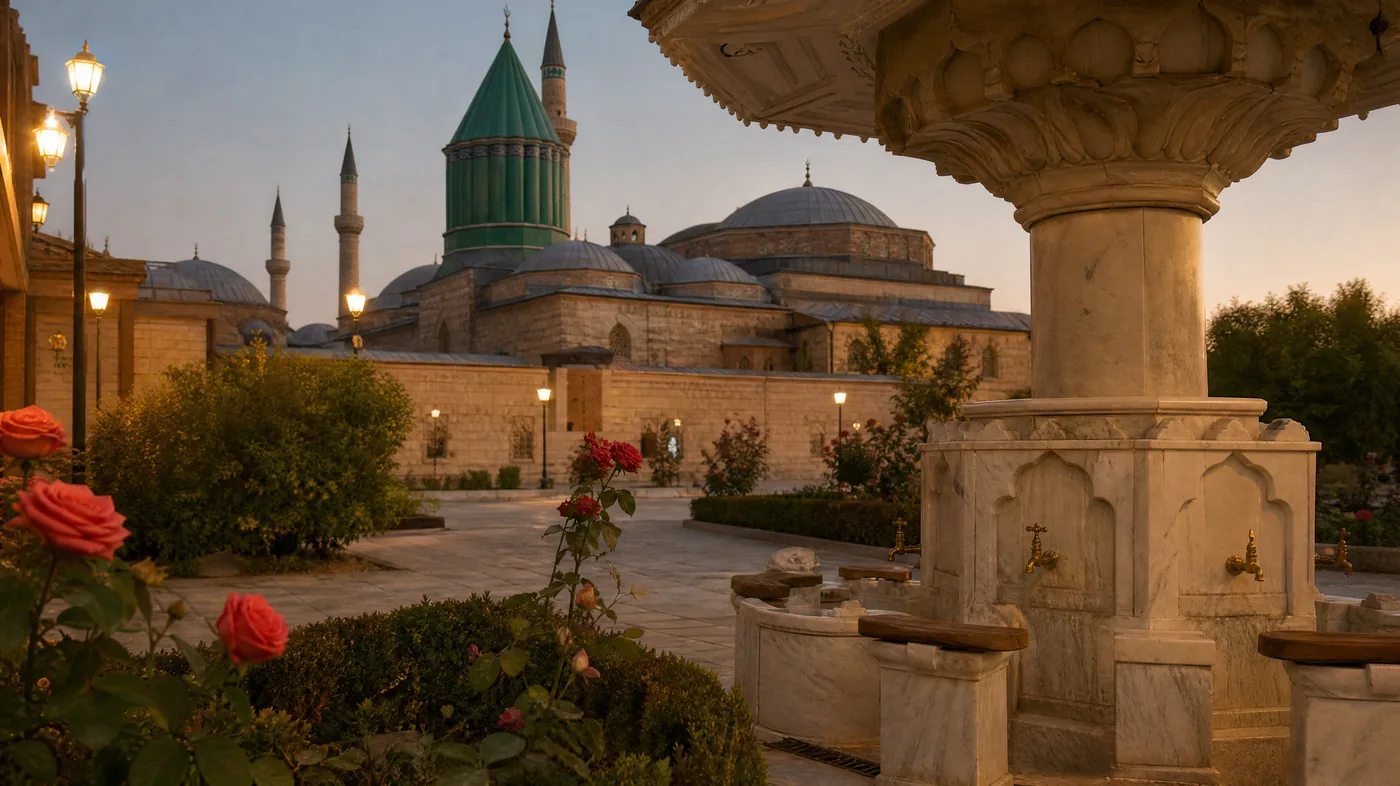
Wikipedia's article on the museum fills in the history. Rumi's successor Hüsameddin Çelebi had the mausoleum built over his master's grave, finished in 1274 and covered in turquoise tiles. A decree of 6 April 1926 turned the tomb and lodge into a museum, which opened on 2 March 1927 and took the name Mevlana Museum in 1954.
- The courtyard: marble paving, an ablution fountain in the middle, the dervishes' kitchen on the right and 17 small domed cells for dervishes on the left. The kitchen is where novices learned the Sema.
- The Sema hall (semahane): instruments on display, among them the ney, and dervish clothing including Rumi's own.
- The books: copies of the Masnavi from 1278 and 1371 and a Divan-i Kebir from 1366.
- The tomb: Rumi's sarcophagus under the dome, with his father and his son Sultan Veled beside him.
It is a place of pilgrimage, so dress as you would for a mosque and keep your voice down. Wikipedia counts 3.4 million visitors in 2019, which made it Türkiye's most visited museum that year. For 2026 opening hours and entry rules, check the Ministry of Culture and Tourism's museum site before you go.
When is Şeb-i Arus 2026 and how do you get tickets?
From 7 to 17 December 2026, in the Sema Hall of the Konya Mevlana Cultural Center. Tickets are sold on biletinial.com and went on sale on 9 October 2026 at 10am.
Those are the official details from the Konya Provincial Directorate of Culture and Tourism, which runs the 753rd commemoration of Rumi's death. Its notice adds two useful lines:
- Free events. During the commemorations, the cultural and art events held in other halls around Konya are free. Only the Sema ceremony is ticketed.
- The program booklet will be posted on the directorate's site when it is ready.
Why December? Rumi died on 17 December 1273. His followers call that night Şeb-i Arus, the "Wedding Night", because they see death as his union with God. GoTürkiye describes the December ceremony as "the controlled, trance-like turning or sema of the white-robed men".
Book early. Wikipedia notes that pilgrims travel from all over the world for the week, which is why tickets are needed at all. Our Şeb-i Arus 2026 post has more on the evening itself.
Can you see a Sema in Konya outside December?
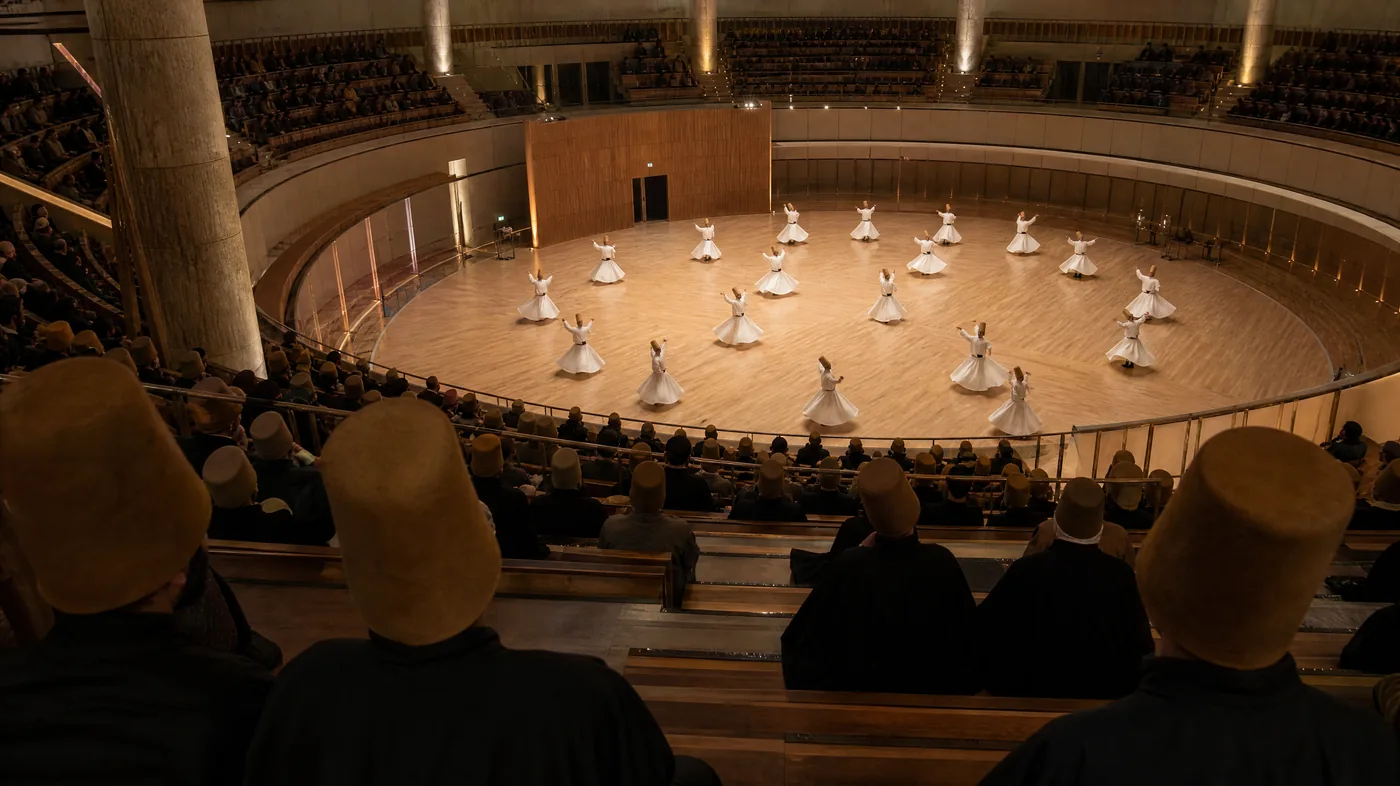
Yes, in most years. GoTürkiye's 48 hours in Konya ends the first day with the Sema at the Mevlana Cultural Center, and press reports describe free weekly ceremonies there on Saturday evenings.
What we could confirm, and from when:
- The Konya News, July 2023: free Sema programs organized by Konya Metropolitan Municipality on Thursdays at 8.30pm in the Mevlana Rose Garden, Fridays at 8.30pm and Sundays at 2.30pm at the Irfan Civilization Research Center, and Saturdays at 7pm in the open Sema area of the Mevlana Cultural Center.
- İstiklal, July 2020: the Ministry of Culture and Tourism's Konya Turkish Sufi Music Ensemble performing every Saturday at 7pm in the same open Sema area.
We found no official 2026 timetable for these weekly ceremonies. Before you build a trip around a Saturday, ask the Konya Provincial Directorate of Culture and Tourism or the Mevlana Cultural Center which nights are on this season.
Can't make Konya work? Istanbul has a Sema every night. The ceremony in a real Mevlevi lodge is closest in spirit to Konya: a lodge founded in the 1620s, with the resident sheikh introducing the ritual.
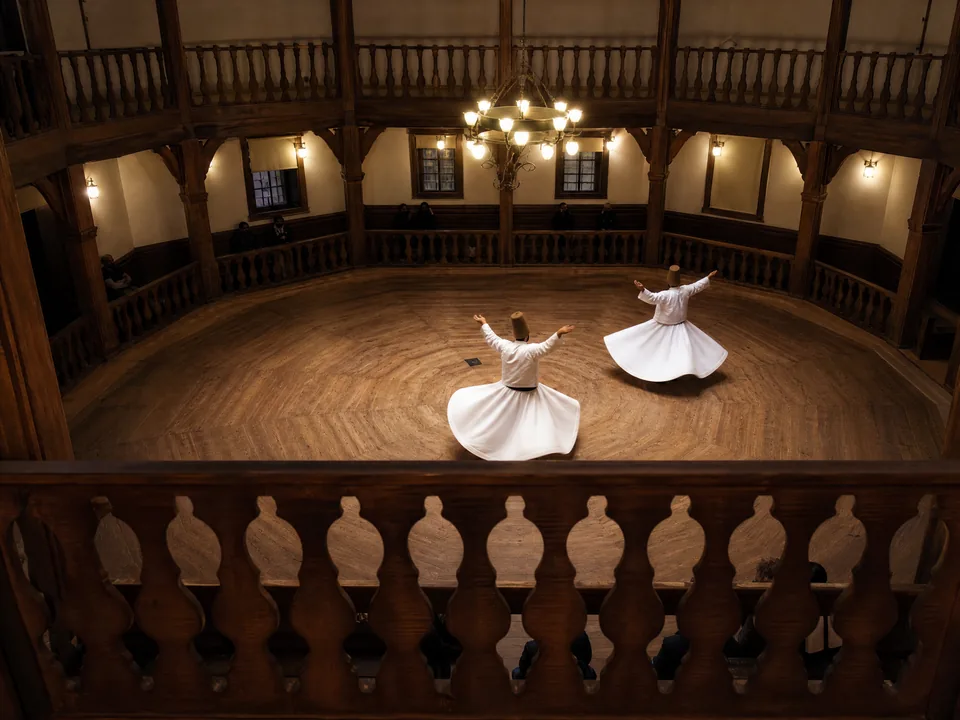
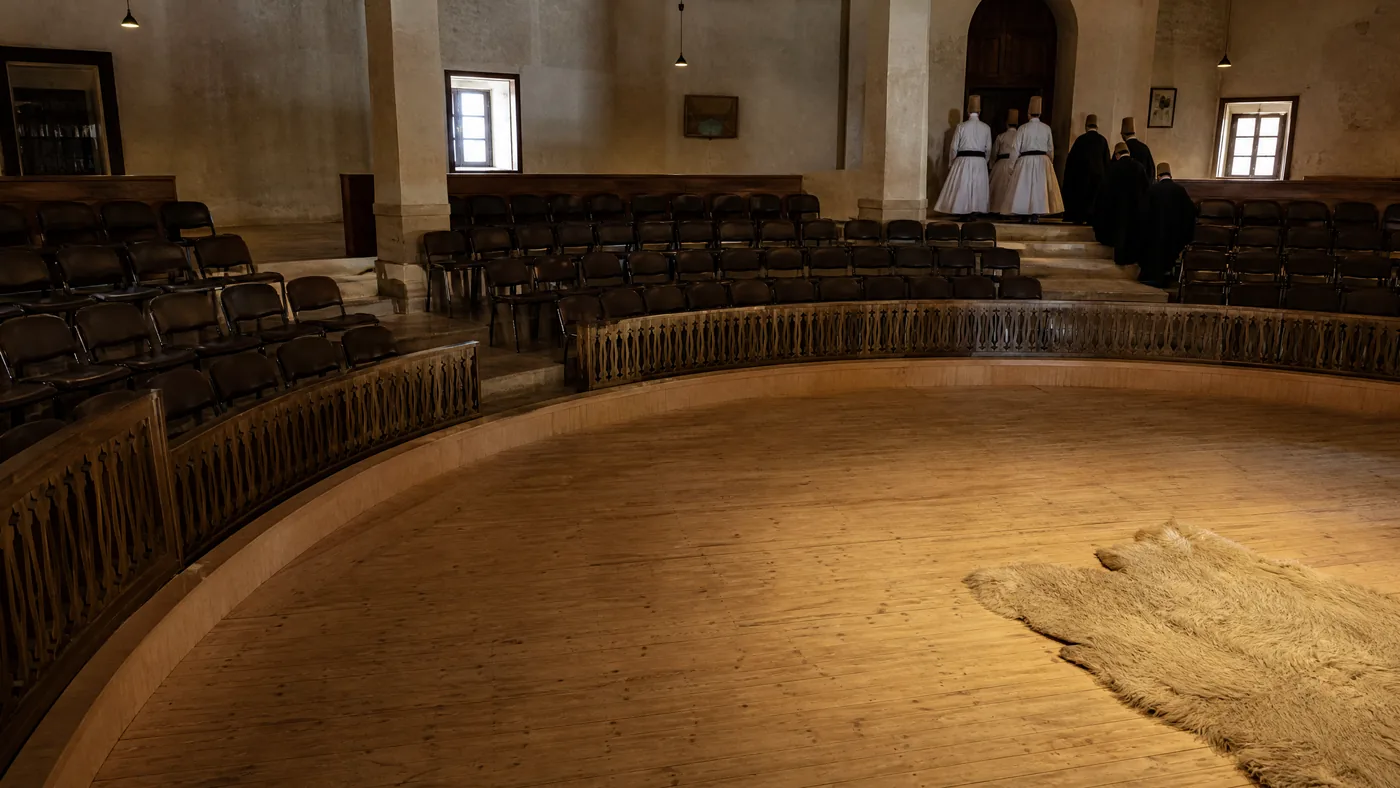
A Sema in Kasimpasa Mevlevihanesi, one of Istanbul's earliest Mevlevi lodges, with a bilingual introduction by the resident sheikh and an exhibition.
Explore the ceremony in a real Mevlevi lodge Tour detailsWhat else should you see in Konya?
GoTürkiye's two-day plan: the Mevlana Museum and the lodge, the Konyanüma Panorama Museum, two Seljuk madrasas, Alaeddin Hill and the village of Sille, then Çatalhöyük on day 2.
Most of day 1 is walkable from the museum:
- Konyanüma Panorama Museum, within walking distance of the Mevlana Museum: oil paintings of Rumi's life and 13th-century Konya, and models of Mevlevi lodges from around the world.
- Karatay Madrasa, built in 1251 and the Tile Works Museum since 1955, and the Ince Minaret Madrasa of 1264, now the Stone and Wood Works Museum, famous for its carved portal.
- Alaeddin Hill with the Alaeddin Mosque, begun in 1221, and the remains of the Seljuk palace.
- Sille, about 15 km out, with the Byzantine Aya Eleni church.
Eat etli ekmek, Konya's long, thin meat bread, at lunch and fırın kebab at dinner, as GoTürkiye suggests. Day 2 goes further out to Çatalhöyük, the Neolithic town on the UNESCO World Heritage List since 2012. Before you leave, pick up Mevlevi-themed souvenirs and a bag of Konya candies.
Short on time in Türkiye? See a Sema in an Ottoman hamam in Istanbul, any evening of the week.
Check dates for the HodjaPasha ceremonyHow do you get to Konya from Istanbul or Cappadocia?
From Istanbul, the easiest way is the high-speed train (YHT) run by TCDD Taşımacılık. From Cappadocia, Konya is a road trip west across the steppe by bus or car.
The Istanbul to Konya high-speed line carried about 13 million passengers in its first 11 years, Transport Minister Abdulkadir Uraloğlu said in December 2025 (Anadolu Agency, reported by TRT Haber). In 2025 an average of 4,856 people a day took it. Trains have economy and business sections and a restaurant car. Check the timetable and fares with TCDD Taşımacılık for your dates, and book well ahead for December.
From Cappadocia there is no train. None of the Cappadocia ceremonies on this site travel to Konya: they run in the evening in Cappadocia. If you are touring both, a simple plan is a Sema in Cappadocia, then Konya for the museum and, in December, Şeb-i Arus. Our Cappadocia guide compares the four ceremonies there.
Konya, Istanbul or Cappadocia: where should you see the Sema?
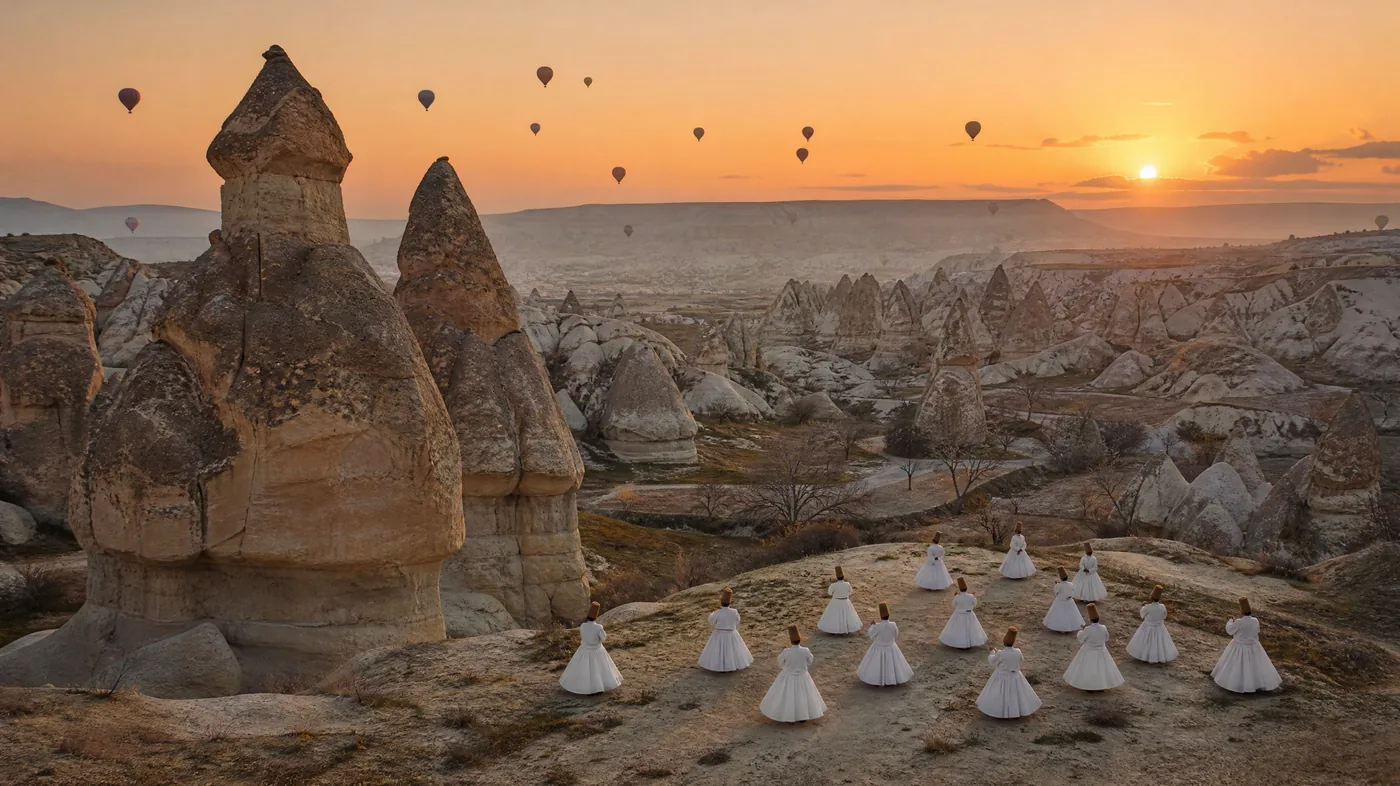
Konya in December, for Şeb-i Arus and Rumi's tomb. Istanbul if you want a ceremony on a date of your choice. Cappadocia if you are already there for the valleys.
The options side by side. Konya details are from the Konya directorate and the press reports above; the ceremonies you can book here are from their listings:
| Where | Venue | When | Length | Booking |
|---|---|---|---|---|
| Konya: Şeb-i Arus | Sema Hall, Mevlana Cultural Center | 7 to 17 December 2026 | Check the program | biletinial.com |
| Konya: weekly Sema | Open Sema area, Mevlana Cultural Center | Saturday 7pm in past years; confirm for 2026 | Check locally | Free in past years |
| Istanbul | HodjaPasha Culture Center, a 15th-century hamam | Daily at 7pm | 1 hour | From $32 |
| Istanbul | Kasimpasa Mevlevihanesi, a lodge from the 1620s | See the listing | 1 hour | From $26 |
| Cappadocia | A historical cave hall 4 km from Goreme | 6pm to 7pm | 1.5 hours in all | From $22 |
| Cappadocia | Motif Kültür Merkezi Sema hall | See the listing | 1 to 1.5 hours | From $8 |
Every ceremony on this site cancels free up to 24 hours before, which helps if your Konya plans are still moving. For the full Istanbul list, read our guide to the Istanbul ceremonies.
Frequently asked questions
Which city is known for its whirling dervishes?
Konya, in central Türkiye. Rumi lived and is buried there, and UNESCO says the Mevlevi order was founded in Konya in 1273.
When is Şeb-i Arus in 2026?
From 7 to 17 December 2026 at the Mevlana Cultural Center in Konya, per the Konya Provincial Directorate of Culture and Tourism. Tickets are on biletinial.com.
Can I book a Konya ceremony on this site?
No. The ceremonies on this site are in Istanbul and Cappadocia. Konya's December tickets are sold on biletinial.com.
Where was Rumi born?
In Balkh, in today's Afghanistan, on 30 September 1207, per HodjaPasha's biography. His family settled in Konya in 1228.
Ready to book
Choose your ceremony
Free cancellation up to 24 hours before on every option. Prices are from-prices in USD and move with the season.
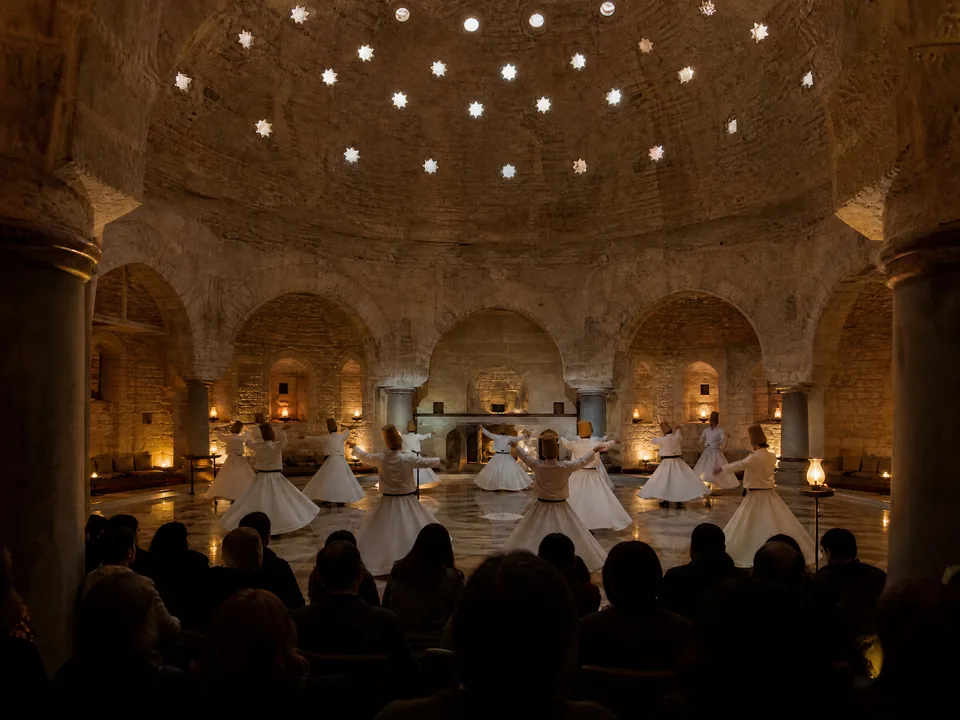
HodjaPasha Whirling Dervishes Ceremony & Exhibition
- Sema ceremony ticket
- Program booklet
- Bottled water
Whirling Dervishes Ceremony in a Real Mevlevi Lodge
- Whirling dervishes ceremony
- Bilingual introduction
- Exhibition access
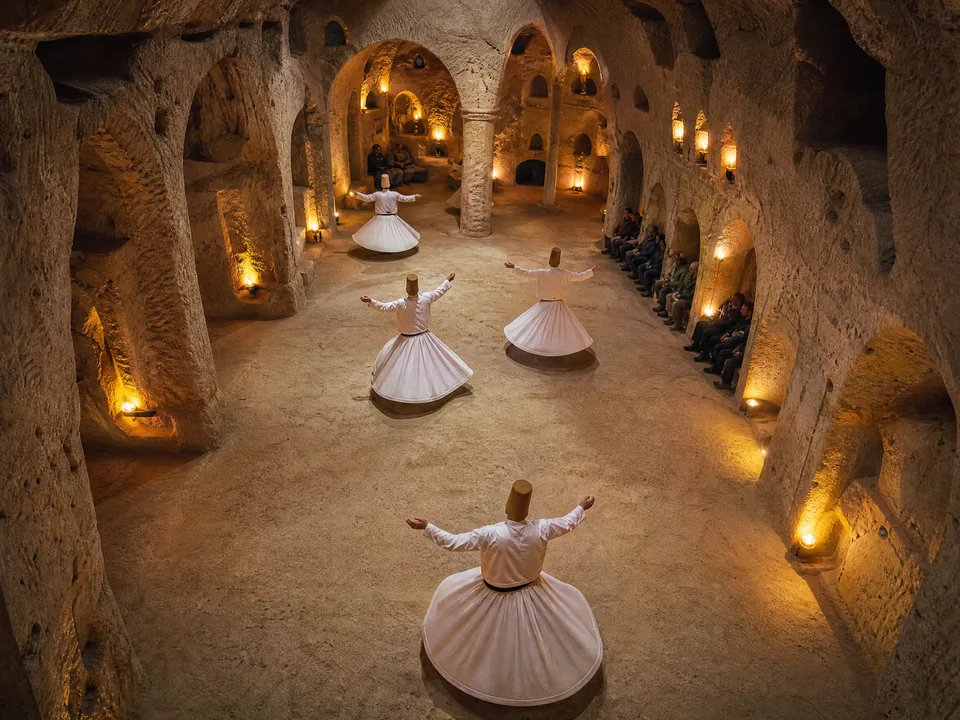
Whirling Dervishes Ceremony in a Historical Cave
A 50-minute Sema in a cave hall at 6pm, five minutes from Goreme