Booking choice: The HodjaPasha ceremony, from $32 per person. Check dates Tour details
The dates come from the 2027 calendar of Diyanet, Türkiye's Presidency of Religious Affairs, as reported by Evrensel on 24 August 2026 and by Dünya. The visitor advice is GoTürkiye's, from its page “Ramadan in Türkiye”. Ceremony times are from hodjapasha.com and the GetYourGuide listings.
The quick answer
Per Diyanet's 2027 calendar, the first fast is on Monday 8 February 2027 and the Ramadan Feast runs from Tuesday 9 to Thursday 11 March 2027. Nothing on hodjapasha.com or the listings here announces a Ramadan change: HodjaPasha's Sema is every day at 7pm, so check the time on the listing for your date. GoTürkiye asks visitors to avoid eating or drinking in front of people who are fasting.
When is Ramadan 2027?
From Monday 8 February to Monday 8 March 2027, per Diyanet. The Ramadan Feast follows from Tuesday 9 to Thursday 11 March 2027.
Evrensel reported Diyanet's 2027 calendar on 24 August 2026: first fast on 8 February, Kadir Gecesi on 5 March, the eve of the feast on 8 March and the three feast days from 9 to 11 March. Dünya gives the same start, Night of Power and first feast day. The first sahur, the meal before dawn, falls in the night from Sunday 7 to Monday 8 February.
Each day's fast runs from dawn to sunset, so the hours shift a little through the month. Diyanet publishes a timetable for every city, the imsakiye, which the Turkish press reprints each year. For scale: on the first day of Ramadan 2026, 19 February, Istanbul's iftar was at 6.49pm, per Diyanet's timetable as printed by A Spor. In 2027 the month starts eleven days earlier in the year.
| Date | What it is |
|---|---|
| Night of Sunday 7 to Monday 8 February 2027 | The first sahur, the meal before dawn |
| Monday 8 February 2027 | The first day of fasting |
| Friday 5 March 2027 | Kadir Gecesi, the Night of Power |
| Monday 8 March 2027 | Arefe, the eve of the Ramadan Feast; the public holiday starts at 1pm |
| Tuesday 9 to Thursday 11 March 2027 | The Ramadan Feast (Ramazan Bayramı), a public holiday |
Do whirling dervish ceremonies run during Ramadan?
Nothing on hodjapasha.com or on the listings here announces a Ramadan change. HodjaPasha's Sema is every day at 7pm; for any date, check the time on the listing.
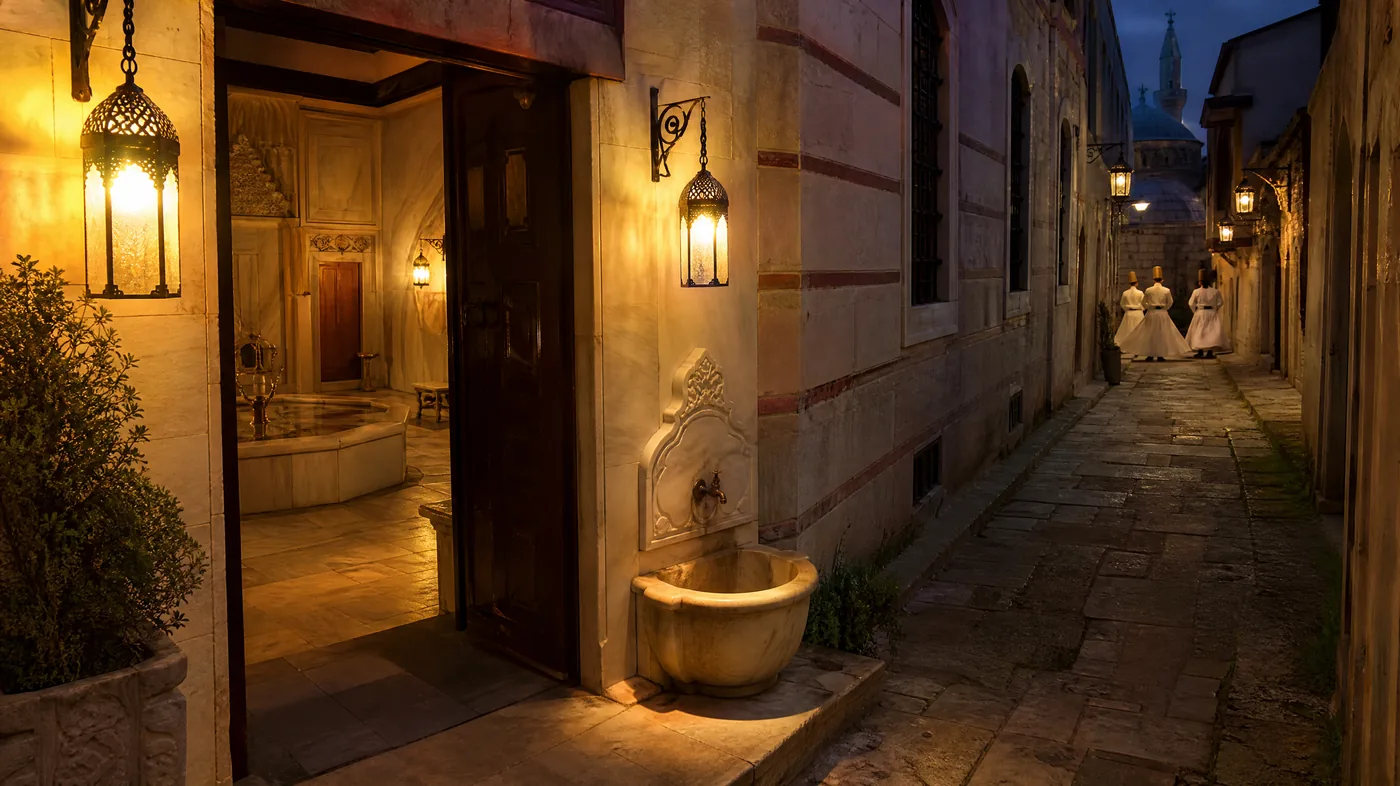
The only time to plan around is iftar. The fast ends at sunset, early in the evening in February and March (check Diyanet's timetable for your date), and GoTürkiye notes that traffic can be at its heaviest just before sunset, when people race home to break the fast. Leave early for HodjaPasha: check-in is 30 minutes before, and the hamam is a few minutes on foot from Sirkeci station, which is easier than a taxi at that hour.
The Sema itself sits well with the month. HodjaPasha's own FAQ calls it “a spiritual ceremony that contains religious symbols.” Every ceremony on this site cancels free up to 24 hours before, so booking early costs you nothing.
| Ceremony | From (USD) | Length | Evening timing |
|---|---|---|---|
| HodjaPasha | $32 | 1 hour | Every day at 7pm per hodjapasha.com; check-in 30 minutes before |
| Next to Hagia Sophia | $15 | 55 minutes | Start time by date on the listing; tea or sherbet included |
| Real Mevlevi lodge | $26 | 1 hour | Start time by date on the listing; modest clothing recommended |
| Dinner and dervish evening | $80 | 3.5 hours | Ceremony first, then dinner; start time by date on the listing |
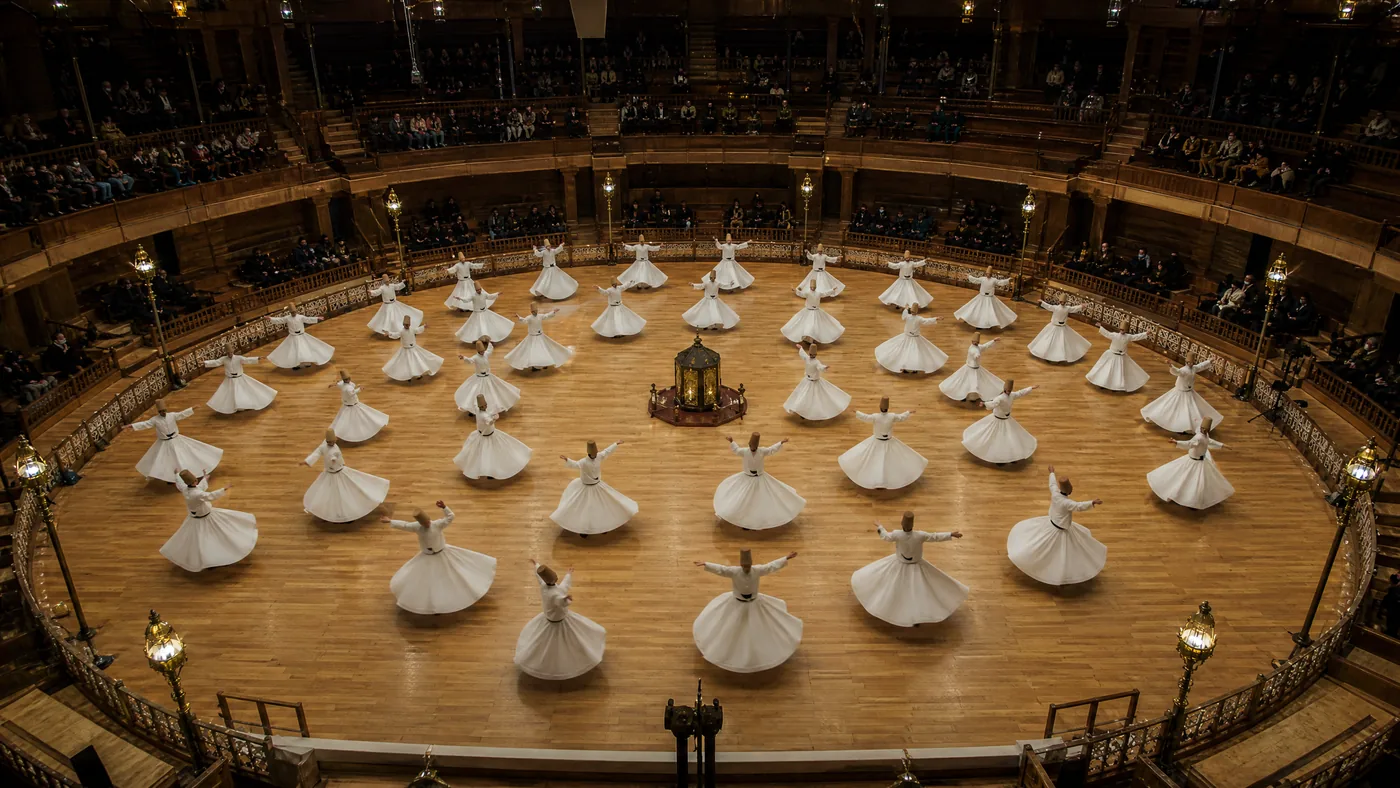
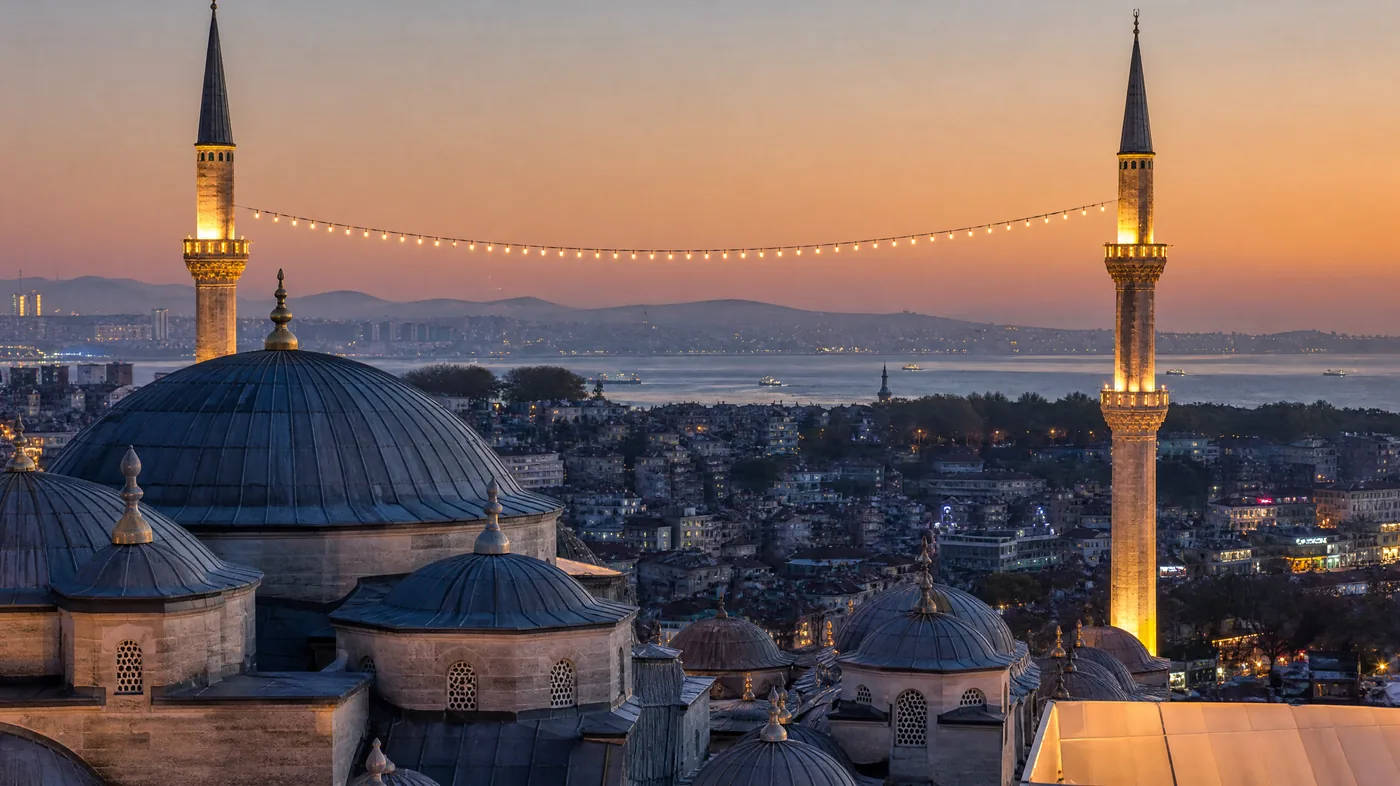
Every evening at 7pm in a 15th-century hamam by Sirkeci: the HodjaPasha Sema, an hour of ney, kudum and whirling.
Check dates for the HodjaPasha ceremonyWhat is Istanbul like during Ramadan?
Quieter by day, lively at night. GoTürkiye calls Istanbul a city that never sleeps and says it is “even more evident during Ramadan”.
GoTürkiye's picture of the month: long queues at the bakeries before iftar for the warm Ramadan pide, minarets lit with colored text after the fast ends, and drums in the small hours to wake people for the meal before dawn. Many shops and restaurants stay open later at night. Restaurants fill at iftar, so book dinner ahead.
It names Sultanahmet Mosque, the Blue Mosque, and Hagia Sophia among the most important mosques of the month, along with Eyüp Sultan, Mihrimah, Pertevniyal Valide Sultan and Fatih. One of the oldest Ramadan events in the city, it adds, is the Feshane Ramadan Feast (Feshane Ramazan Şenlikleri).
How should visitors behave during Ramadan in Istanbul?
Be considerate. GoTürkiye says visitors are not expected to take part in any Ramadan ritual, and asks them to avoid eating or drinking in front of people who are fasting.
GoTürkiye's words: “You are not supposed to attend or adopt any Ramadan rituals”, and “avoiding consuming any food or drinks in front of them is kindly advised during Ramadan.” It also notes that people usually do not eat, drink or smoke in the street.
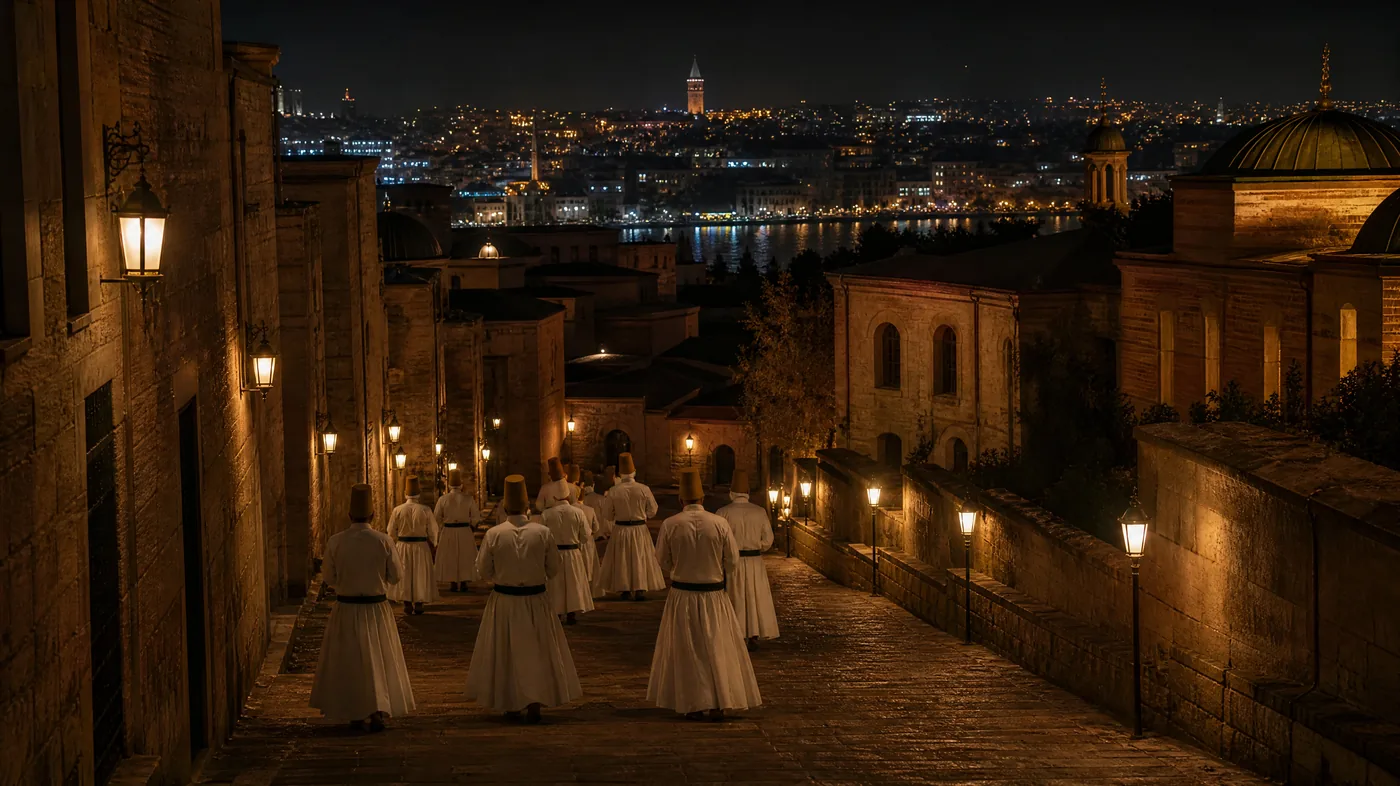
At the ceremony nothing changes. Silence, phones off, no applause at most venues. The Mevlevi lodge recommends modest clothing, per its listing, which suits the month well. The details, venue by venue, are in our Sema etiquette guide.
Can you combine a Sema with dinner during Ramadan?
Yes. The dinner and dervish evening pairs a ceremony with a guided walk and dinner at a 140-year-old family restaurant, and a car to near your hotel.
On the dinner and dervish evening you meet at Sirkeci Post Office, walk to the venue for the ceremony, then sit down to kebabs, meze, salads and drinks, finishing with tea, coffee and dessert, per the listing. Vegetarian or vegan meals are available on request. Plan for 3.5 hours. The start time for a Ramadan date is on the listing; in the holy month a booked table is worth having, since GoTürkiye warns that restaurants fill at iftar.
Angela (Oct 2026) summed it up in five words: “Highlight of our day in Istanbul.” A cheaper pairing: the ceremony next to Hagia Sophia from $15, then iftar in one of the old-city restaurants nearby.
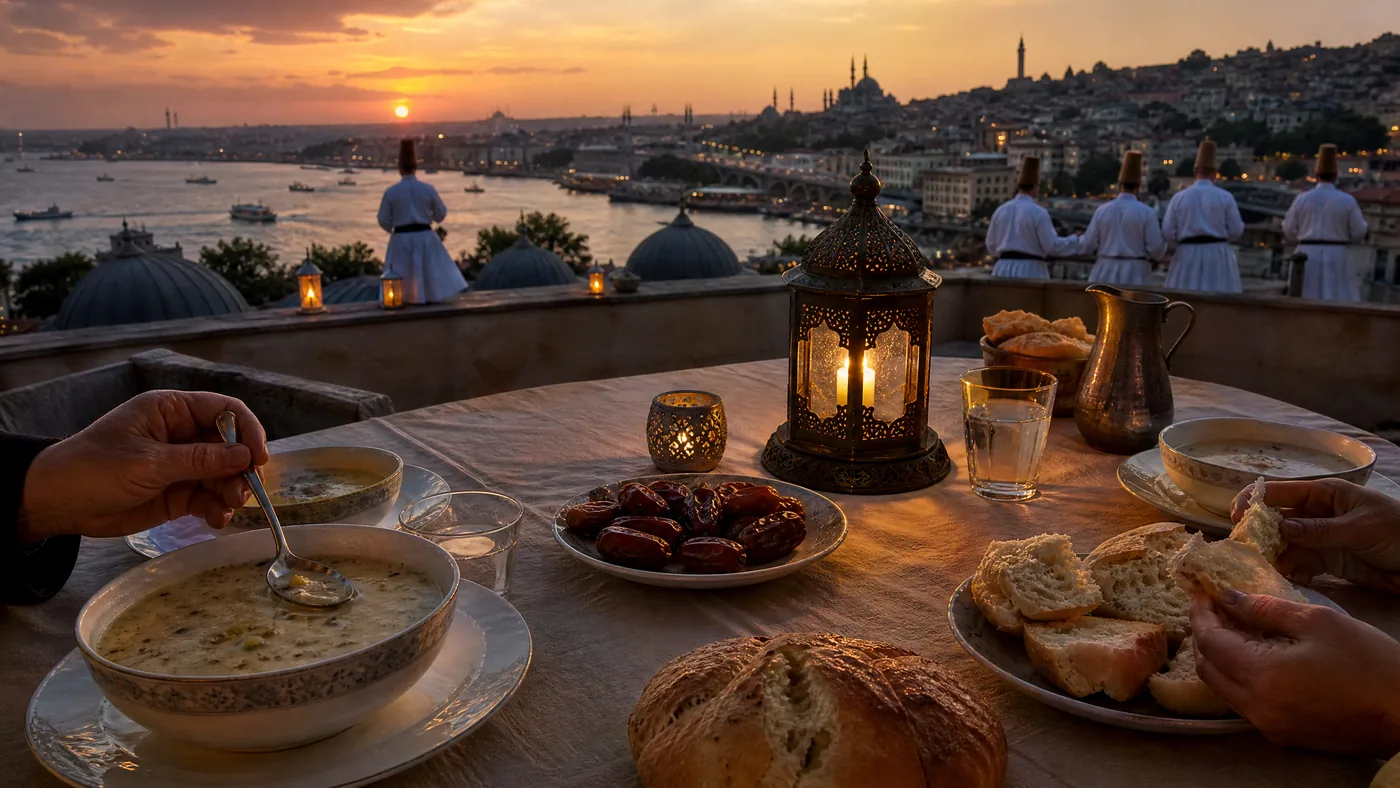
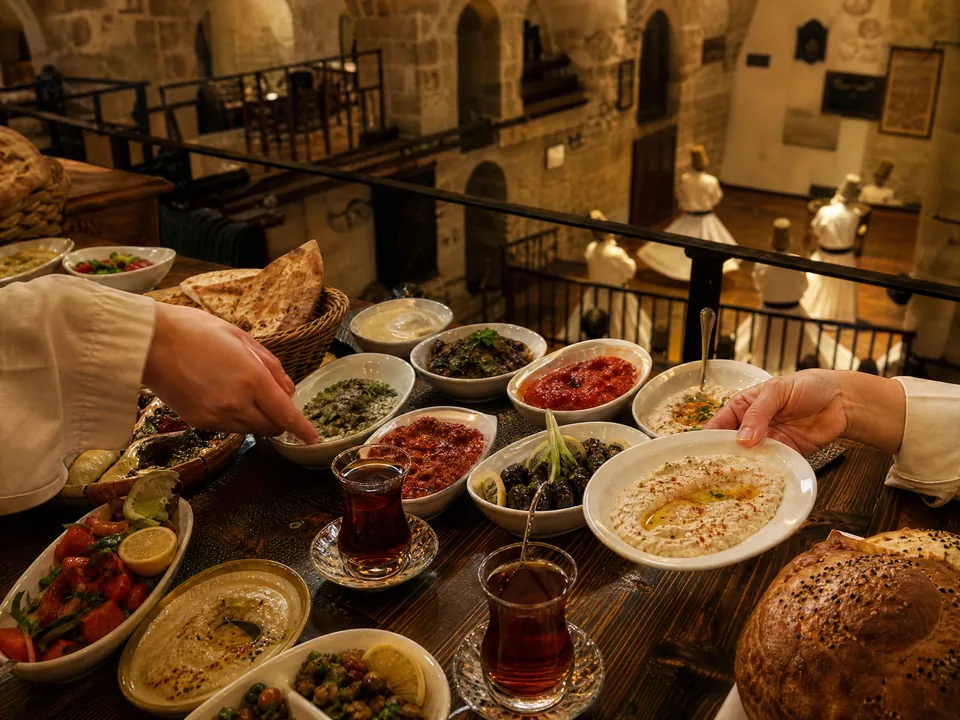
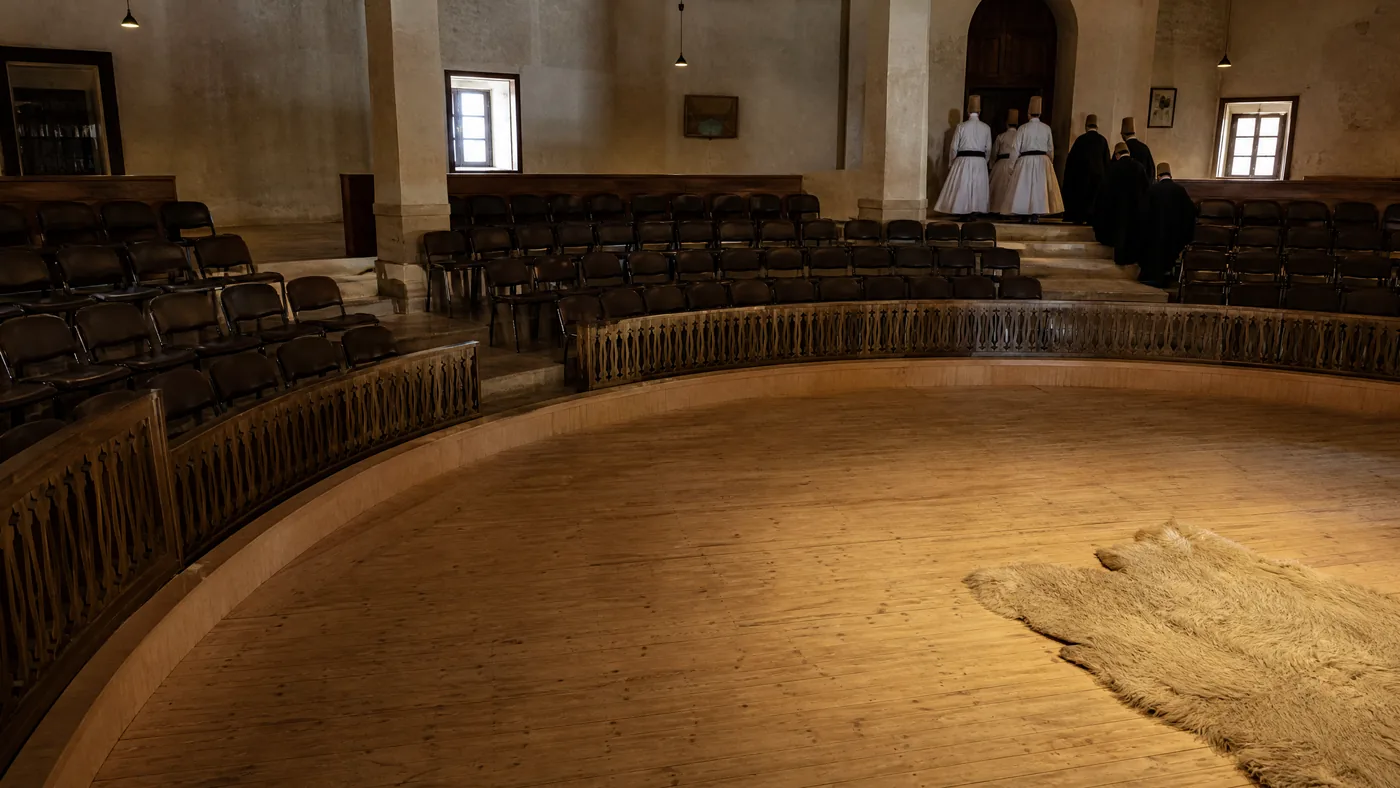
A Sema, a walk with a guide and a long dinner in a 140-year-old family restaurant, with a private car back to near your hotel.
Explore the dinner and dervish evening Tour detailsIs the Ramadan Feast a public holiday in Türkiye?
Yes. Under Turkish Law No. 2429 the Ramadan Feast is a public holiday from 1pm on the eve plus three days: in 2027, from 8 March at 1pm to 11 March.
GoTürkiye describes the Ramadan Feast as the Turkish version of Eid al-Fitr: family breakfasts, visits to elders, sweets and pocket money for the children. Hotels may add special menus and music. It is a time of family visits across the country, so book ceremony seats early for those days.
If your trip runs on into the spring, our ticket price post compares every ceremony on this site, and our Istanbul guide helps you choose a hall.
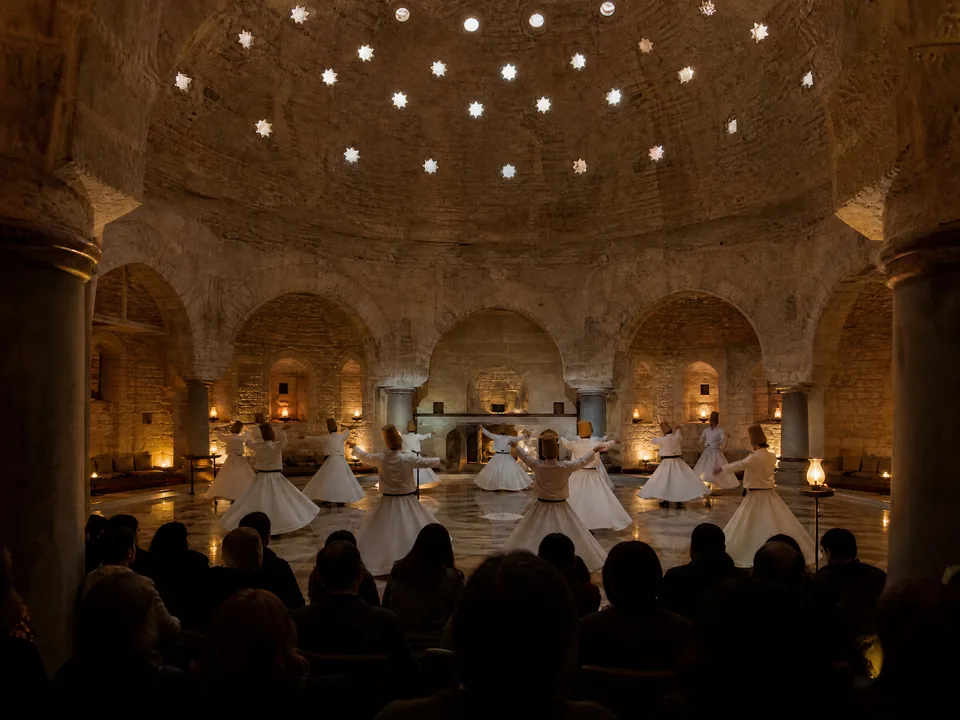
Istanbul's most booked Sema, every day at 7pm: Mevlevi music and whirling under a hamam dome, with the dervish exhibition before the ceremony.
Explore the HodjaPasha ceremony Tour detailsFrequently asked questions
When does Ramadan 2027 start in Türkiye?
The first fast is on Monday 8 February 2027, per Diyanet's 2027 calendar. The first sahur is in the night from 7 to 8 February.
When is the Ramadan Feast in 2027?
From Tuesday 9 to Thursday 11 March 2027, per Diyanet. The eve, 8 March, is a public holiday from 1pm.
Do whirling dervish ceremonies run during Ramadan in Istanbul?
No listing here announces a Ramadan change, and HodjaPasha's Sema is every day at 7pm. Check the time on the listing for your date.
Can tourists eat in public during Ramadan in Istanbul?
Many shops and restaurants extend their hours at night, per GoTürkiye, which asks visitors to avoid eating or drinking in front of people who are fasting.
Ready to book
Choose your ceremony
Free cancellation up to 24 hours before on every option. Prices are from-prices in USD and move with the season.
HodjaPasha Whirling Dervishes Ceremony & Exhibition
- Sema ceremony ticket
- Program booklet
- Bottled water
Traditional Turkish Dinner & Dervish Experience
The ceremony, a guided walk and dinner, with a car back
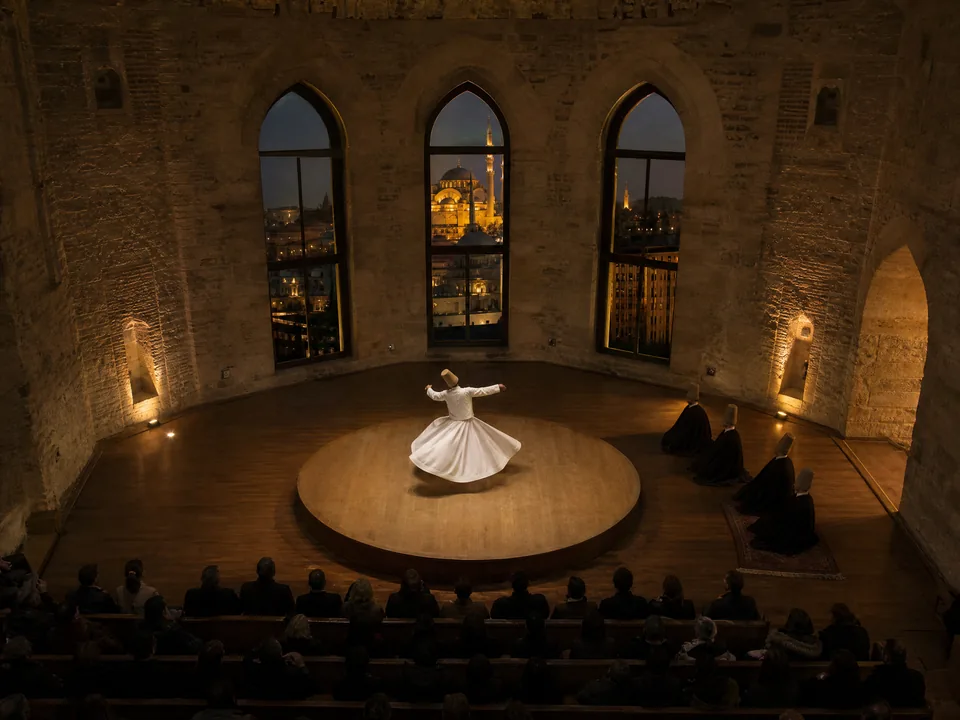
Whirling Dervish Ceremony next to Hagia Sophia
- Ceremony entry with live music
- Tea or sherbet and water
- Smart audio guide in 8 languages